


- Afhalen na 1 uur in een winkel met voorraad
- Gratis thuislevering in België vanaf € 30
- Ruim aanbod met 7 miljoen producten
- Afhalen na 1 uur in een winkel met voorraad
- Gratis thuislevering in België vanaf € 30
- Ruim aanbod met 7 miljoen producten





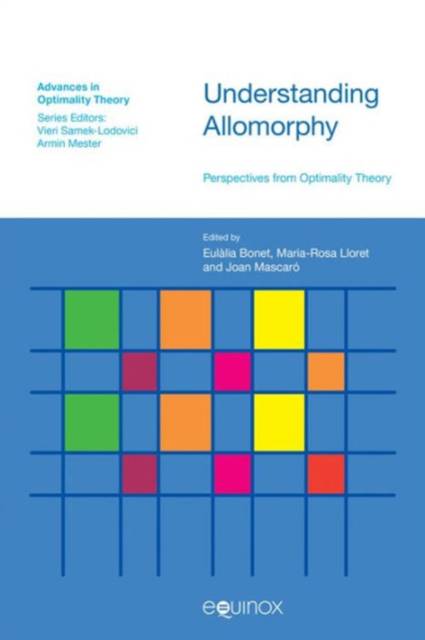
Understanding Allomorphy
Perspectives from Optimality Theory
€ 146,45
+ 292 punten
Omschrijving
This volume is a collection of original contributions to the study of lexical allomorphy, with a focus on Optimality Theory's distinctive take on this topic. The chapters provide an up-to-date perspective on the advances in our understanding of allomorphy which Optimality Theory has been able to secure (in comparison with rule-based Generative Phonology). They also consider a number of important allomorphy questions which Optimality Theory has helped raise and address (e.g. the nature of inputs, the role of paradigms, the interaction of phonology with other modules of grammar, lexical storage vs computation, degrees of phonological (ir)regularity, subcategorization vs markedness). The contributors form an international array of linguists from North America and Europe. A broad variety of languages serve as the empirical base for the volume, either in detailed case studies (e.g. Burushaski, Catalan, English, French, Italian, Moroccan Arabic, Sahaptin) or in encompassing typological surveys. The volume is aimed at professional linguists with an interest in phonology, morphology, and the lexicon. With its broad coverage of allomorphy issues, the book's content will also lend itself to courses in phonology and morphology for advanced undergraduates and graduate students.
Specificaties
Betrokkenen
- Uitgeverij:
Inhoud
- Aantal bladzijden:
- 320
- Taal:
- Engels
- Reeks:
Eigenschappen
- Productcode (EAN):
- 9781845532970
- Verschijningsdatum:
- 1/07/2015
- Uitvoering:
- Hardcover
- Formaat:
- Genaaid
- Afmetingen:
- 156 mm x 234 mm
- Gewicht:
- 757 g


Alleen bij Standaard Boekhandel
+ 292 punten op je klantenkaart van Standaard Boekhandel
Cadeau

AANGERADEN


Beoordelingen
We publiceren alleen reviews die voldoen aan de voorwaarden voor reviews. Bekijk onze voorwaarden voor reviews.