


- Afhalen na 1 uur in een winkel met voorraad
- Gratis thuislevering in België vanaf € 30
- Ruim aanbod met 7 miljoen producten
- Afhalen na 1 uur in een winkel met voorraad
- Gratis thuislevering in België vanaf € 30
- Ruim aanbod met 7 miljoen producten





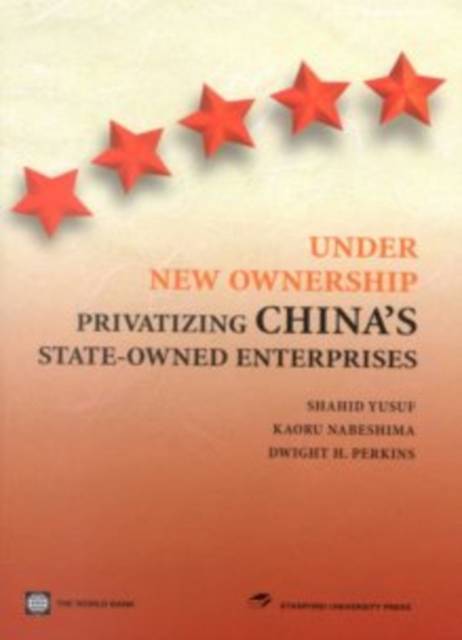
Under New Ownership
Privatizing China's State-Owned Enterprises
Shahid Yusuf, Kaoru Nabeshima, Dwight H Perkins
Paperback | Engels
€ 33,95
+ 67 punten
Uitvoering
Omschrijving
Although China's centrally planned economy is a little more than a shadow of its former self, the closely inter-linked reforms of the enterprise and banking sectors are still incomplete. The relative size of the state-owned enterprise sector has been much reduced, however, the sector remains the dominant borrower from the banking system and is responsible for the majority of bank non-performing assets. Thus in the interests of financial stability it is crucial to implement the remaining reform agenda. The accession to the WTO has also made it more urgent for China's most-dynamic state-owned enterprises and her banking industry to compete through innovation, continuing process upgrades, and active pursuit of strategies aimed at succeeding in global markets. In order to do so, not only do large state-owned industrial enterprises need to be privatized, but the government also needs to create the conditions that will result in market determined consolidation of small and medium size firms into entities with a core strength. 'Under New Ownership' explores the effects of ownership reform in China on the performance of reformed industrial state-owned enterprises, and proposes privatization as a course of action to truly transform these enterprises into world class firms which compete on the basis of sound strategy, effective organization, and innovation. It draws upon newly collected firm level survey data to assess changes in the ownership structure of state enterprises on management, governance, innovation, and performance relative to other types of firms in China. This title provides researchers, students, and policymakers interested in the Chinese economy with in depth information and analysis on key issues related to the reform of state-owned enterprises.
Specificaties
Betrokkenen
- Auteur(s):
- Uitgeverij:
Inhoud
- Aantal bladzijden:
- 296
- Taal:
- Engels
Eigenschappen
- Productcode (EAN):
- 9780821356241
- Verschijningsdatum:
- 15/11/2005
- Uitvoering:
- Paperback
- Formaat:
- Trade paperback (VS)
- Afmetingen:
- 161 mm x 234 mm
- Gewicht:
- 426 g


Alleen bij Standaard Boekhandel
+ 67 punten op je klantenkaart van Standaard Boekhandel
Cadeau

AANGERADEN


Beoordelingen
We publiceren alleen reviews die voldoen aan de voorwaarden voor reviews. Bekijk onze voorwaarden voor reviews.