


- Afhalen na 1 uur in een winkel met voorraad
- Gratis thuislevering in België vanaf € 30
- Ruim aanbod met 7 miljoen producten
- Afhalen na 1 uur in een winkel met voorraad
- Gratis thuislevering in België vanaf € 30
- Ruim aanbod met 7 miljoen producten





€ 21,68
+ 21 punten
Omschrijving
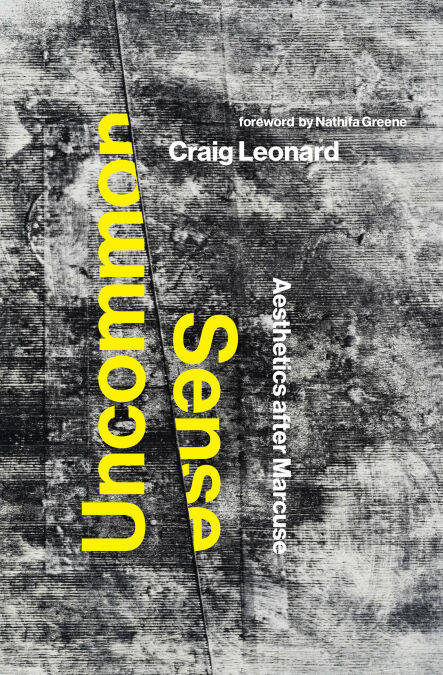
An examination of Herbert Marcuse’s political claim for the aesthetic dimension, focusing on defamiliarization as a means of developing radical sensibility.
In Uncommon Sense, Craig Leonard argues for the contemporary relevance of the aesthetic theory of Herbert Marcuse—an original member of the Frankfurt School and icon of the New Left—while also acknowledging his philosophical limits. His account reinvigorates Marcuse for contemporary readers, putting his aesthetic theory into dialogue with antiracist and anti-capitalist activism. Leonard emphasizes several key terms not previously analyzed within Marcuse’s aesthetics, including defamiliarization, anti-art, and habit. In particular, he focuses on the centrality of defamiliarization—a subversion of common sense that can be a means to the development of what Marcuse refers to as “radical sensibility.”
Leonard brings forward Marcuse’s claim that the aesthetic dimension is political because of its refusal to operate according to the repressive common sense that establishes and maintains relationships dictated by advanced capitalism. For Marcuse, defamiliarization is at the center of the aesthetic dimension, offering the direct means of stimulating its political potential. Leonard expands upon Marcuse’s aesthetics by drawing on the work of Sylvia Wynter, going beyond Marcuse’s predominantly European and patrilineal intellectual framework—while still retaining his aesthetic theory’s fundamental characteristics—toward a human dimension requiring decolonial, feminist, antiracist, and counterpoetic perspectives.
In Uncommon Sense, Craig Leonard argues for the contemporary relevance of the aesthetic theory of Herbert Marcuse—an original member of the Frankfurt School and icon of the New Left—while also acknowledging his philosophical limits. His account reinvigorates Marcuse for contemporary readers, putting his aesthetic theory into dialogue with antiracist and anti-capitalist activism. Leonard emphasizes several key terms not previously analyzed within Marcuse’s aesthetics, including defamiliarization, anti-art, and habit. In particular, he focuses on the centrality of defamiliarization—a subversion of common sense that can be a means to the development of what Marcuse refers to as “radical sensibility.”
Leonard brings forward Marcuse’s claim that the aesthetic dimension is political because of its refusal to operate according to the repressive common sense that establishes and maintains relationships dictated by advanced capitalism. For Marcuse, defamiliarization is at the center of the aesthetic dimension, offering the direct means of stimulating its political potential. Leonard expands upon Marcuse’s aesthetics by drawing on the work of Sylvia Wynter, going beyond Marcuse’s predominantly European and patrilineal intellectual framework—while still retaining his aesthetic theory’s fundamental characteristics—toward a human dimension requiring decolonial, feminist, antiracist, and counterpoetic perspectives.
Specificaties
Betrokkenen
- Auteur(s):
- Uitgeverij:
Inhoud
- Aantal bladzijden:
- 256
- Taal:
- Engels
Eigenschappen
- Productcode (EAN):
- 9780262371674
- Verschijningsdatum:
- 26/09/2022
- Uitvoering:
- E-book
- Beveiligd met:
- Adobe DRM
- Formaat:
- ePub


Alleen bij Standaard Boekhandel
+ 21 punten op je klantenkaart van Standaard Boekhandel
Cadeau

AANGERADEN


Beoordelingen
We publiceren alleen reviews die voldoen aan de voorwaarden voor reviews. Bekijk onze voorwaarden voor reviews.