


- Afhalen na 1 uur in een winkel met voorraad
- Gratis thuislevering in België vanaf € 30
- Ruim aanbod met 7 miljoen producten
- Afhalen na 1 uur in een winkel met voorraad
- Gratis thuislevering in België vanaf € 30
- Ruim aanbod met 7 miljoen producten





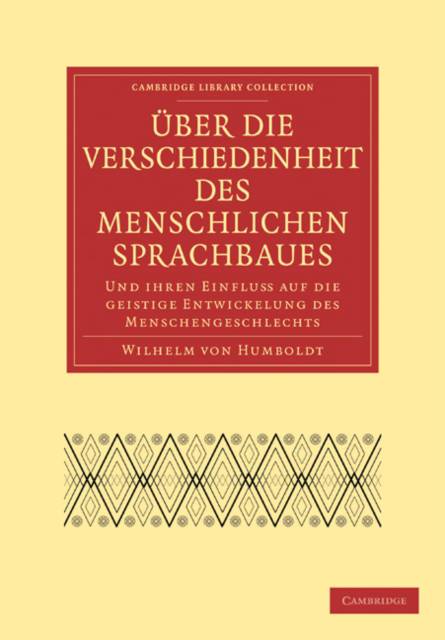
Uber Die Verschiedenheit Des Menschlichen Sprachbaues Und Ihren Einflu Auf Die Geistige Entwickelung Des Menschengeschlechts
Wilhelm Von Humboldt
€ 50,45
+ 100 punten
Omschrijving
Wilhelm von Humboldt's classic study of human language was first published posthumously in 1836 and influenced generations of scholars of language including Boas, Sapir and Chomsky. In the later twentieth century, Humboldt's pioneering philosophical and linguistic works began once again to attract scholarly attention in their own right, and in the context of Humboldt's lively communication with other leading scholars of his day. This book, now reissued, summarises the author's theoretical views of language, its universal structures and its relation to mind, education and culture. It ranges far beyond the Indo-European languages and explores the ways in which the grammatical structures of languages make them more or less suitable as instruments of thought and cultural development. Humboldt also addresses the relationship between written and spoken language. To this day, this landmark publication remains one of the most significant attempts to draw philosophical conclusions from comparative linguistics.
Specificaties
Betrokkenen
- Auteur(s):
- Uitgeverij:
Inhoud
- Aantal bladzijden:
- 528
- Taal:
- Duits
- Reeks:
Eigenschappen
- Productcode (EAN):
- 9781108006460
- Verschijningsdatum:
- 26/11/2009
- Uitvoering:
- Paperback
- Formaat:
- Trade paperback (VS)
- Afmetingen:
- 170 mm x 244 mm
- Gewicht:
- 830 g


Alleen bij Standaard Boekhandel
+ 100 punten op je klantenkaart van Standaard Boekhandel
Cadeau

AANGERADEN


Beoordelingen
We publiceren alleen reviews die voldoen aan de voorwaarden voor reviews. Bekijk onze voorwaarden voor reviews.