


- Afhalen na 1 uur in een winkel met voorraad
- Gratis thuislevering in België vanaf € 30
- Ruim aanbod met 7 miljoen producten
- Afhalen na 1 uur in een winkel met voorraad
- Gratis thuislevering in België vanaf € 30
- Ruim aanbod met 7 miljoen producten





Omschrijving
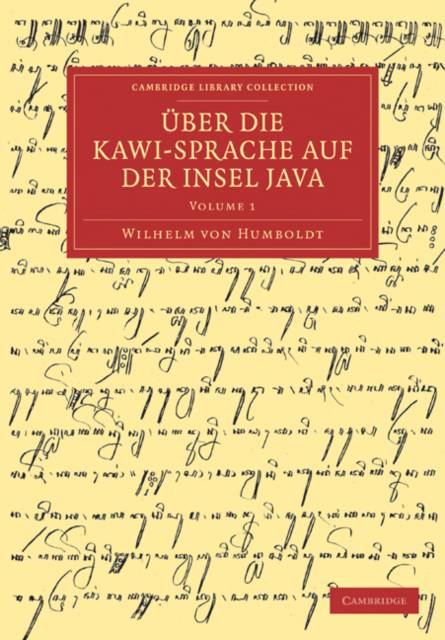
Wilhelm von Humboldt (1767-1835) was a German philologist, diplomat and philosopher. While Minister of Education he was responsible for reforming the Prussian education system. His pioneering achievements in linguistics influenced many later scholars including Chomsky. This monumental three-volume study of Kawi, a traditional formal and literary language of Java belonging to the Austronesian language family, was posthumously published in 1836-9. The manuscript was prepared for the press by J. K. E. Buschmann, a protégé of Humboldt's friend and colleague Bopp (also reissued in this series). Humboldt considered Kawi, which includes many Sanskrit loan-words, to be the common ancestor of all the Malayo-Polynesian languages, though this view is no longer accepted. Volume 1 begins with a preface by Humboldt's brother Alexander describing Wilhelm's extensive academic network, and reprints Wilhelm's famous 1836 essay on language, before focusing on the question of Indian (Sanskrit and Buddhist) influences on Javan language and society.
Specificaties
Betrokkenen
- Auteur(s):
- Uitgeverij:
Inhoud
- Aantal bladzijden:
- 774
- Taal:
- Duits
- Reeks:
Eigenschappen
- Productcode (EAN):
- 9781108031530
- Verschijningsdatum:
- 15/09/2011
- Uitvoering:
- Paperback
- Formaat:
- Trade paperback (VS)
- Afmetingen:
- 170 mm x 244 mm
- Gewicht:
- 1211 g


Alleen bij Standaard Boekhandel
+ 290 punten op je klantenkaart van Standaard Boekhandel
Cadeau

AANGERADEN


Beoordelingen
We publiceren alleen reviews die voldoen aan de voorwaarden voor reviews. Bekijk onze voorwaarden voor reviews.