


- Afhalen na 1 uur in een winkel met voorraad
- Gratis thuislevering in België vanaf € 30
- Ruim aanbod met 7 miljoen producten
- Afhalen na 1 uur in een winkel met voorraad
- Gratis thuislevering in België vanaf € 30
- Ruim aanbod met 7 miljoen producten





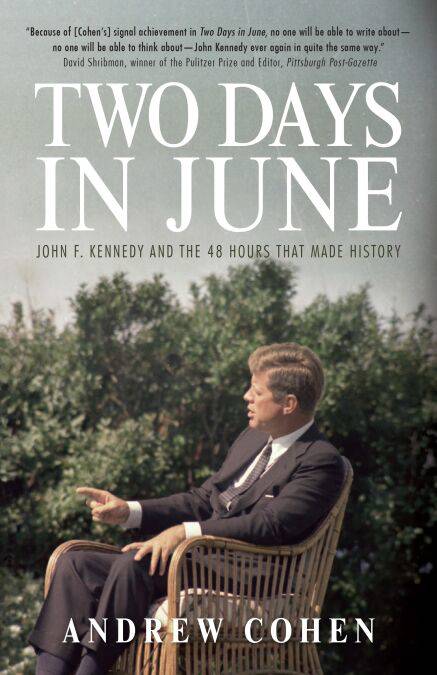
Two Days in June E-BOOK
John F. Kennedy and the 48 Hours that Made History
Andrew Cohen
E-book | Engels
€ 18,73
+ 18 punten
Omschrijving
June 1963. John Fitzgerald Kennedy has been president of the United States for almost two and a half years. That spring he is at a tipping point, grappling with the two seismic forces of his time: nuclear arms and civil rights. On two consecutive days, in two lyrical addresses, he asks Americans
to abandon their prejudices in the shadow of the Cold War and Jim Crow. The first leads to the Limited Nuclear Test Ban Treaty of 1963, the second to the Civil Rights Act of 1964.
Two Days in June captures Kennedy at the high noon of his presidency. Based on unseen documentary footage, JFK’s feverish forty-eight hours unspool in suspenseful clarity. In this tick-tock of the presidency, we see him everywhere from facing down George Wallace over the integration of the University of Alabama to talking obsessively about sex and politics at a dinner party in Georgetown.
There were 1,036 days in the presidency of John F. Kennedy. This is the story of two of them.
to abandon their prejudices in the shadow of the Cold War and Jim Crow. The first leads to the Limited Nuclear Test Ban Treaty of 1963, the second to the Civil Rights Act of 1964.
Two Days in June captures Kennedy at the high noon of his presidency. Based on unseen documentary footage, JFK’s feverish forty-eight hours unspool in suspenseful clarity. In this tick-tock of the presidency, we see him everywhere from facing down George Wallace over the integration of the University of Alabama to talking obsessively about sex and politics at a dinner party in Georgetown.
There were 1,036 days in the presidency of John F. Kennedy. This is the story of two of them.
Specificaties
Betrokkenen
- Auteur(s):
- Uitgeverij:
Inhoud
- Aantal bladzijden:
- 320
- Taal:
- Engels
Eigenschappen
- Productcode (EAN):
- 9780771023880
- Verschijningsdatum:
- 10/11/2014
- Uitvoering:
- E-book
- Beveiligd met:
- Adobe DRM
- Formaat:
- ePub



Alleen bij Standaard Boekhandel
+ 18 punten op je klantenkaart van Standaard Boekhandel
CADEAU

AANGERADEN


Beoordelingen
We publiceren alleen reviews die voldoen aan de voorwaarden voor reviews. Bekijk onze voorwaarden voor reviews.