


- Afhalen na 1 uur in een winkel met voorraad
- Gratis thuislevering in België vanaf € 30
- Ruim aanbod met 7 miljoen producten
- Afhalen na 1 uur in een winkel met voorraad
- Gratis thuislevering in België vanaf € 30
- Ruim aanbod met 7 miljoen producten




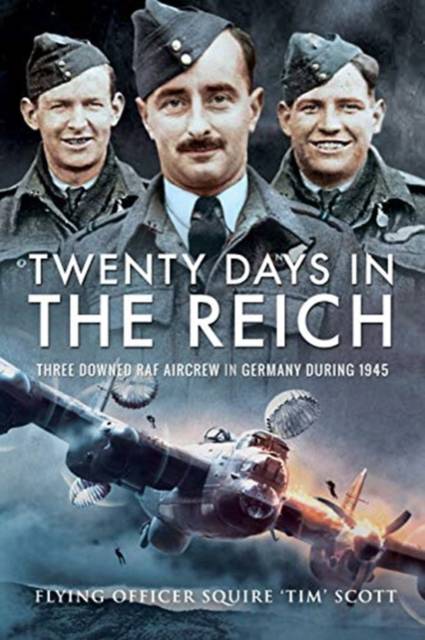
Twenty Days in the Reich
Three Downed RAF Aircrew in Germany During 1945
Squire 'tim' Scott
Paperback | Engels
€ 18,45
+ 36 punten
Uitvoering
Omschrijving
On 15 March 1945, a force of sixteen Avro Lancasters from RAF Bomber Command's Nos 9 and 617 Squadrons was dispatched to attack a viaduct at Arnsberg. The fourteen aircraft from 9 Squadron carried Tallboys, while the two remaining Lancasters, from 617 Squadron, were loaded with Grand Slams.
During the mission, which failed to cut the viaduct, three crew members from one of the 9 Squadron Lancasters baled out from their badly damaged aircraft over the eastern Ruhr. The author of this book, Flying Officer Squire Tim Scott, the Lancaster's navigator, was one of those men.
All three airmen soon found themselves in quiet countryside but were quickly captured and imprisoned in a village jail. After a short time, they were moved to a prisoner of war camp in what was one of the strangest journeys of the Second World War.
Two German guards led the little group more than 120 miles across the crumbling Third Reich. With the German transport system in chaos, the party had to hitch rides on a variety of farm and commercial vehicles, though they did travel part of the way on one of the few trains still running in Germany.
Conditions on the journey were hash and the nights were bitterly cold. There was also the threat of danger, for the RAF was rife with tales of horrific violence when downed Allied bomber crews fell into civilian hands. But the two guards were sympathetic, and the small party was amazed by the civility of the local people.
At one stage their guards fell asleep and escape was considered, but eventually rejected and the trio was eventually handed over to the staff at a transit PoW camp. Before they were rescued by Allied forces, twenty days after baling out, the three had only spent fifteen days as prisoners and just thirty-six hours behind barbed wire.
During the mission, which failed to cut the viaduct, three crew members from one of the 9 Squadron Lancasters baled out from their badly damaged aircraft over the eastern Ruhr. The author of this book, Flying Officer Squire Tim Scott, the Lancaster's navigator, was one of those men.
All three airmen soon found themselves in quiet countryside but were quickly captured and imprisoned in a village jail. After a short time, they were moved to a prisoner of war camp in what was one of the strangest journeys of the Second World War.
Two German guards led the little group more than 120 miles across the crumbling Third Reich. With the German transport system in chaos, the party had to hitch rides on a variety of farm and commercial vehicles, though they did travel part of the way on one of the few trains still running in Germany.
Conditions on the journey were hash and the nights were bitterly cold. There was also the threat of danger, for the RAF was rife with tales of horrific violence when downed Allied bomber crews fell into civilian hands. But the two guards were sympathetic, and the small party was amazed by the civility of the local people.
At one stage their guards fell asleep and escape was considered, but eventually rejected and the trio was eventually handed over to the staff at a transit PoW camp. Before they were rescued by Allied forces, twenty days after baling out, the three had only spent fifteen days as prisoners and just thirty-six hours behind barbed wire.
Specificaties
Betrokkenen
- Auteur(s):
- Uitgeverij:
Inhoud
- Aantal bladzijden:
- 224
- Taal:
- Engels
Eigenschappen
- Productcode (EAN):
- 9781526766632
- Verschijningsdatum:
- 26/04/2020
- Uitvoering:
- Paperback
- Formaat:
- Trade paperback (VS)
- Afmetingen:
- 155 mm x 231 mm
- Gewicht:
- 362 g


Alleen bij Standaard Boekhandel
+ 36 punten op je klantenkaart van Standaard Boekhandel
Cadeau

AANGERADEN


Beoordelingen
We publiceren alleen reviews die voldoen aan de voorwaarden voor reviews. Bekijk onze voorwaarden voor reviews.