



- Afhalen na 1 uur in een winkel met voorraad
- In januari gratis thuislevering in België
- Ruim aanbod met 7 miljoen producten
- Afhalen na 1 uur in een winkel met voorraad
- In januari gratis thuislevering in België
- Ruim aanbod met 7 miljoen producten





€ 16,95
+ 33 punten
Omschrijving
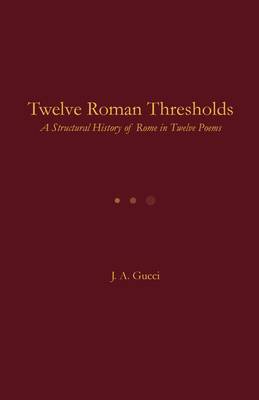
Twelve Roman Thresholds: A Structural History of Rome in Twelve Poems presents Rome not as a sequence of events, but as a system under pressure.
Each of the twelve poems models a natural process-geological fracture, hydrological flow, biological parasitism, astronomical collapse-and places it in direct structural correspondence with Roman civilization. These are not metaphors or illustrations. They are parallel systems that behave in the same way: they accumulate, destabilize, and ultimately cross a threshold beyond which they cannot return.
Built on the method of Absolute Composition, the book replaces narrative explanation with precise structure. Every poem operates through three underlying phases-accumulation, strain, and release-allowing readers to observe how complex systems form, expand, and break. Rome emerges not through description, but through pattern.
The reader plays an active role. Rather than being told what the poem means, the reader identifies where pressure builds, where imbalance occurs, and where transformation happens. The poems end at or near the moment of rupture-the threshold-requiring the reader to recognize the structural shift.
An appendix outlines the governing principles behind the work, including threshold dynamics, system limits, compression, and irreversibility. Within the larger Twelve series, this volume represents Rome as a civilization defined not by stability or interaction, but by expansion pushed to the point of collapse.
Designed for both classroom use and independent study, Twelve Roman Thresholds is suitable for high school and early college readers, as well as those interested in history, philosophy, systems thinking, and experimental poetics. It offers a disciplined, original framework for understanding how civilizations-and systems of all kinds-reach their limits and transform.
Specificaties
Betrokkenen
- Auteur(s):
- Uitgeverij:
Inhoud
- Aantal bladzijden:
- 40
- Taal:
- Engels
Eigenschappen
- Productcode (EAN):
- 9781972788073
- Verschijningsdatum:
- 1/05/2026
- Uitvoering:
- Paperback
- Formaat:
- Trade paperback (VS)
- Afmetingen:
- 140 mm x 216 mm
- Gewicht:
- 58 g


Alleen bij Standaard Boekhandel
+ 33 punten op je klantenkaart van Standaard Boekhandel
Cadeau

AANGERADEN


Beoordelingen
We publiceren alleen reviews die voldoen aan de voorwaarden voor reviews. Bekijk onze voorwaarden voor reviews.