



- Afhalen na 1 uur in een winkel met voorraad
- In januari gratis thuislevering in België
- Ruim aanbod met 7 miljoen producten
- Afhalen na 1 uur in een winkel met voorraad
- In januari gratis thuislevering in België
- Ruim aanbod met 7 miljoen producten




Omschrijving
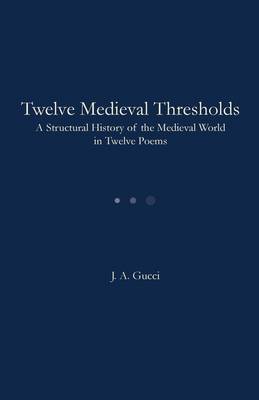
Twelve Medieval Thresholds reimagines the medieval world not as a sequence of events, but as a network of systems under pressure. Through twelve tightly structured poems, the book models how societies form, strain, and transform-revealing the underlying mechanics of labor, obligation, scarcity, exchange, and collapse.
Each poem is composed using the method of Absolute Composition, in which structure replaces narrative and metaphor. Rather than explaining history, the poems enact it: condition, interaction, and emergence unfold through precise correspondence with natural systems such as atmospheric cycles, geological shifts, and biological processes.
This approach invites active participation. Key transitions are intentionally withheld, positioning the reader as the threshold through which the system completes itself. Instead of asking what a poem "means," readers track what it does-how forces interact, how pressure builds, and how transformation occurs.
Ideal for high school and early college classrooms, as well as independent readers interested in history, systems thinking, and innovative poetic form, Twelve Medieval Thresholds offers a new way to engage with the past: not as static content, but as dynamic structure.
Part of the Twelve series, which includes volumes on Egypt, Mesopotamia, Greece, and Rome, this book focuses on the medieval period as a landscape of transition-where systems no longer hold, and new forms begin to emerge.
Specificaties
Betrokkenen
- Auteur(s):
- Uitgeverij:
Inhoud
- Aantal bladzijden:
- 30
- Taal:
- Engels
- Reeks:
Eigenschappen
- Productcode (EAN):
- 9781972788097
- Verschijningsdatum:
- 1/05/2026
- Uitvoering:
- Paperback
- Formaat:
- Trade paperback (VS)
- Afmetingen:
- 140 mm x 216 mm
- Gewicht:
- 45 g


Alleen bij Standaard Boekhandel
+ 27 punten op je klantenkaart van Standaard Boekhandel
Cadeau

AANGERADEN


Beoordelingen
We publiceren alleen reviews die voldoen aan de voorwaarden voor reviews. Bekijk onze voorwaarden voor reviews.