


- Afhalen na 1 uur in een winkel met voorraad
- Gratis thuislevering in België vanaf € 30
- Ruim aanbod met 7 miljoen producten
- Afhalen na 1 uur in een winkel met voorraad
- Gratis thuislevering in België vanaf € 30
- Ruim aanbod met 7 miljoen producten





Omschrijving
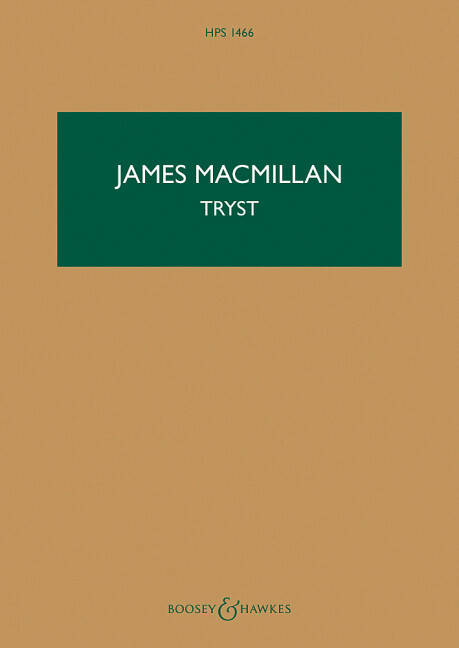
Tryst, for chamber orchestra, was composed in 1989 and has since established itself both in the concert hall and as a ballet score. The composer explains the genesis of the work in the form of a love poem by William Soutar written in broad Scots, called The Tryst, which he set to a very simple melody. This melody has persistently appeared, in various guises, in many works composed since – the congregational St Anne’s Mass, a tiny fragment for violin and piano (After the Tryst), in the music theatre piece Búsqueda, and in the choral Miserere. Not only did it crop up again in Tryst, but it has provided both the title and the emotional core of the music. “Its melodic characteristics, matching the original words, seem to imply many very strong associations – commitment, sanctity, intimacy, faith, love, but it is also saturated with a sadness as if all these things are about to expire.”Suitable for advanced standard performers.
Instrumentation:
chamber orchestra
Instrumentation:
chamber orchestra
Specificaties
Betrokkenen
- Uitgeverij:
Inhoud
- Aantal bladzijden:
- 116
- Reeks:
- Reeksnummer:
- nr. 1466
Eigenschappen
- Productcode (EAN):
- 9780851627847
- Verschijningsdatum:
- 01/01/2015
- Afmetingen:
- 185 mm x 260 mm
- Gewicht:
- 278 g

Alleen bij Standaard Boekhandel
+ 80 punten op je klantenkaart van Standaard Boekhandel
Cadeau

AANGERADEN


Beoordelingen
We publiceren alleen reviews die voldoen aan de voorwaarden voor reviews. Bekijk onze voorwaarden voor reviews.