


- Afhalen na 1 uur in een winkel met voorraad
- Gratis thuislevering in België vanaf € 30
- Ruim aanbod met 7 miljoen producten
- Afhalen na 1 uur in een winkel met voorraad
- Gratis thuislevering in België vanaf € 30
- Ruim aanbod met 7 miljoen producten





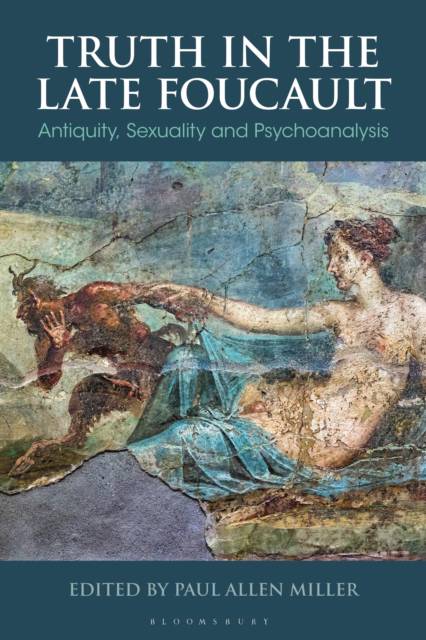
Truth in the Late Foucault
Antiquity, Sexuality, and Psychoanalysis
€ 67,95
+ 135 punten
Omschrijving
The first full treatment of truth as a core philosophical concept in the late Foucault, this volume examines his work on the ancient world and the early church.Each essay features a deep examination as to how the topics of truth and sexuality intersect with and focus on Foucault's engagement with ancient philosophy and thought. Truth in the Late Foucault offers readings on Plato, Artemidorus, Cicero, Sophocles and the Stoics, and pays close attention to Cassian, Paulinus of Nola, and early Christian practices of confession.
With the publication of the long-awaited volume 4 of the History of Sexuality: Confessions of the Flesh, the shape of the final Foucault is now brought into stark relief. As well as looking at ancient thought, the contributors explore Foucault's work in relation to philosophers such as Gadamer, Heidegger, Derrida and Descartes. Foucault's long-running and often contentious dialogue with psychoanalysis, on the relation between truth and the subject, is also examined. Each essay not only makes an important statement, but also is part of an interconnected arc of topics and understanding, covering both the ancient and modern periods. This book reveals that Foucault's concern with antiquity raises questions deeply pertinent to the present moment.
With the publication of the long-awaited volume 4 of the History of Sexuality: Confessions of the Flesh, the shape of the final Foucault is now brought into stark relief. As well as looking at ancient thought, the contributors explore Foucault's work in relation to philosophers such as Gadamer, Heidegger, Derrida and Descartes. Foucault's long-running and often contentious dialogue with psychoanalysis, on the relation between truth and the subject, is also examined. Each essay not only makes an important statement, but also is part of an interconnected arc of topics and understanding, covering both the ancient and modern periods. This book reveals that Foucault's concern with antiquity raises questions deeply pertinent to the present moment.
Specificaties
Betrokkenen
- Uitgeverij:
Inhoud
- Aantal bladzijden:
- 248
- Taal:
- Engels
- Reeks:
Eigenschappen
- Productcode (EAN):
- 9781350357303
- Verschijningsdatum:
- 22/01/2026
- Uitvoering:
- Paperback
- Formaat:
- Trade paperback (VS)
- Afmetingen:
- 156 mm x 234 mm
- Gewicht:
- 344 g

Alleen bij Standaard Boekhandel
+ 135 punten op je klantenkaart van Standaard Boekhandel
AANGERADEN


Beoordelingen
We publiceren alleen reviews die voldoen aan de voorwaarden voor reviews. Bekijk onze voorwaarden voor reviews.