


- Afhalen na 1 uur in een winkel met voorraad
- Gratis thuislevering in België vanaf € 30
- Ruim aanbod met 7 miljoen producten
- Afhalen na 1 uur in een winkel met voorraad
- Gratis thuislevering in België vanaf € 30
- Ruim aanbod met 7 miljoen producten





€ 124,45
+ 248 punten
Omschrijving
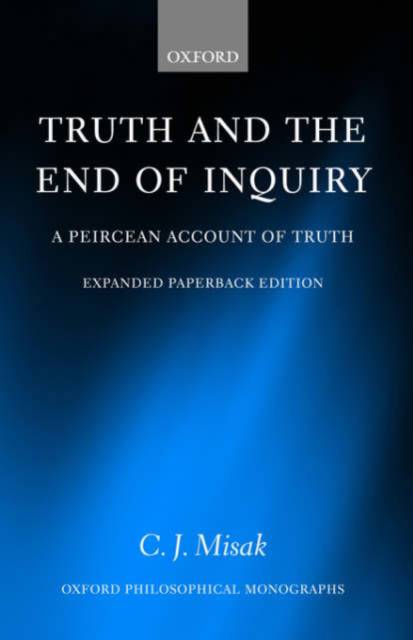
C.S. Peirce, the founder of pragmatism, argued that truth is what we would agree upon, were inquiry to be pursued as far as it could fruitfully go. In this book, Misak argues for and elucidates the pragmatic account of truth, paying attention both to Peirce's texts and to the requirements of a suitable account of truth. An important argument of the book is that we must be sensitive to the difference between offering a definition of truth and engaging in a distinctively pragmatic project. The pragmatic project spells out the relationship between truth and inquiry; it articulates the consequences of a statement's being true. The existence of a distinct pragmatic enterprise has implications for the status of the pragmatic account of truth and for the way in which philosophy should be conducted.
Specificaties
Betrokkenen
- Auteur(s):
- Uitgeverij:
Inhoud
- Aantal bladzijden:
- 232
- Taal:
- Engels
- Reeks:
Eigenschappen
- Productcode (EAN):
- 9780199270590
- Verschijningsdatum:
- 6/05/2004
- Uitvoering:
- Paperback
- Formaat:
- Trade paperback (VS)
- Afmetingen:
- 137 mm x 217 mm
- Gewicht:
- 276 g


Alleen bij Standaard Boekhandel
+ 248 punten op je klantenkaart van Standaard Boekhandel
Cadeau

AANGERADEN


Beoordelingen
We publiceren alleen reviews die voldoen aan de voorwaarden voor reviews. Bekijk onze voorwaarden voor reviews.