


- Afhalen na 1 uur in een winkel met voorraad
- Gratis thuislevering in België vanaf € 30
- Ruim aanbod met 7 miljoen producten
- Afhalen na 1 uur in een winkel met voorraad
- Gratis thuislevering in België vanaf € 30
- Ruim aanbod met 7 miljoen producten





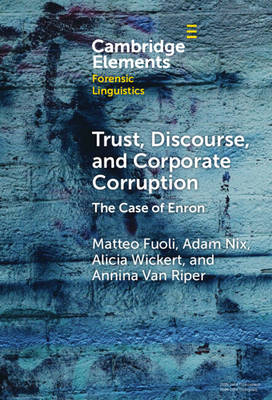
Trust, Discourse, and Corporate Corruption
The Case of Enron
Matteo Fuoli, Adam Nix, Alicia Wickert, Annina Van Riper
€ 79,45
+ 158 punten
Uitvoering
Omschrijving
In this Element, the authors propose a new framework for studying how trust is built and manipulated in discourse and apply it to one of the most notorious cases of corporate misconduct in history: the Enron fraud. The framework outlines the discursive strategies speakers commonly use to manage trust, providing a tool for examining how language shapes relationships and enables wrongdoing in both physical and digital environments. The analysis, which focuses on a previously unexplored corpus of telephone conversations involving Enron traders, uncovers the discursive mechanisms through which Enron managed trust both internally and externally while manipulating California's energy markets. The findings not only provide novel insights into the Enron case but also advance our understanding of the linguistic and pragmatic foundations of trust and the relationship between discourse, trust, and corporate corruption. This title is also available as Open Access on Cambridge Core.
Specificaties
Betrokkenen
- Auteur(s):
- Uitgeverij:
Inhoud
- Aantal bladzijden:
- 96
- Taal:
- Engels
- Reeks:
Eigenschappen
- Productcode (EAN):
- 9781009665971
- Verschijningsdatum:
- 22/01/2026
- Uitvoering:
- Hardcover
- Formaat:
- Genaaid
- Afmetingen:
- 152 mm x 229 mm
- Gewicht:
- 299 g


Alleen bij Standaard Boekhandel
+ 158 punten op je klantenkaart van Standaard Boekhandel
Cadeau

AANGERADEN


Beoordelingen
We publiceren alleen reviews die voldoen aan de voorwaarden voor reviews. Bekijk onze voorwaarden voor reviews.