


- Afhalen na 1 uur in een winkel met voorraad
- Gratis thuislevering in België vanaf € 30
- Ruim aanbod met 7 miljoen producten
- Afhalen na 1 uur in een winkel met voorraad
- Gratis thuislevering in België vanaf € 30
- Ruim aanbod met 7 miljoen producten





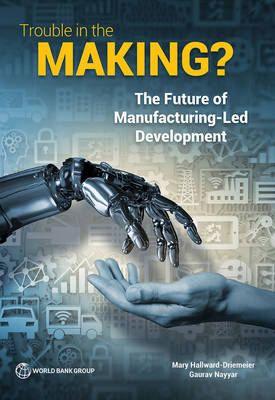
Trouble in the Making?
The Future of Manufacturing-Led Development
Mary Hallward-Driemeier, Gaurav Nayyar
Paperback | Engels
€ 56,45
+ 112 punten
Omschrijving
Technology and globalization are threatening manufacturing's traditional ability to deliver both productivity and jobs at a large scale for unskilled workers. Concerns about widening inequality within and across countries are raising questions about whether interventions are needed and how effective they could be. Trouble in the Making? The Future of Manufacturing-Led Development addresses three questions: -How has the global manufacturing landscape changed and why does this matter for development opportunities? -How are emerging trends in technology and globalization likely to shape the feasibility and desirability of manufacturing-led development in the future? -If low wages are going to be less important in defining competitiveness, how can less industrialized countries make the most of new opportunities that shifting technologies and globalization patterns may bring? The book examines the impacts of new technologies (i.e., the Internet of Things, 3-D printing, and advanced robotics), rising international competition, and increased servicification on manufacturing productivity and employment. The aim is to inform policy choices for countries currently producing and for those seeking to enter new manufacturing markets. Increased polarization is a risk, but the book analyzes ways to go beyond focusing on potential disruptions to position workers, firms, and locations for new opportunities.
Specificaties
Betrokkenen
- Auteur(s):
- Uitgeverij:
Inhoud
- Aantal bladzijden:
- 252
- Taal:
- Engels
Eigenschappen
- Productcode (EAN):
- 9781464811746
- Verschijningsdatum:
- 19/11/2017
- Uitvoering:
- Paperback
- Formaat:
- Trade paperback (VS)
- Afmetingen:
- 175 mm x 251 mm
- Gewicht:
- 580 g


Alleen bij Standaard Boekhandel
+ 112 punten op je klantenkaart van Standaard Boekhandel
Cadeau

AANGERADEN


Beoordelingen
We publiceren alleen reviews die voldoen aan de voorwaarden voor reviews. Bekijk onze voorwaarden voor reviews.