


- Afhalen na 1 uur in een winkel met voorraad
- Gratis thuislevering in België vanaf € 30
- Ruim aanbod met 7 miljoen producten
- Afhalen na 1 uur in een winkel met voorraad
- Gratis thuislevering in België vanaf € 30
- Ruim aanbod met 7 miljoen producten





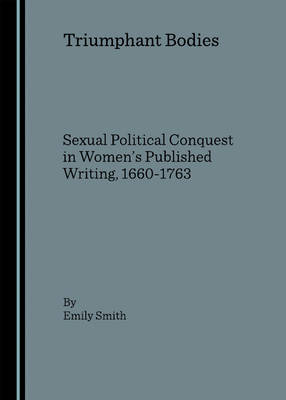
Triumphant Bodies
Sexual Political Conquest in Women's Published Writing, 1660-1763
Emily Smith
Hardcover | Engels
€ 86,45
+ 172 punten
Omschrijving
Triumphant Bodies: Sexual-Political Conquest in British Women's Published Writing, 1660-1769 builds on recent scholarship such as Ros Ballaster's Seductive Forms and Catherine Gallagher's Nobody's Story in order to draw attention to professional female authors' use of a pliant vocabulary of sexuality and politics during the eighteenth century. Throughout the study, Smith emphasizes the blending of gendered, sexed, and politicized language-a blending that allowed women to provocatively challenge, undermine, and rearticulate the terms of power and authority that were available to them in the literary marketplace. Triumphant Bodies centers on Aphra Behn, Mary Wortley Montagu, Charlotte Lennox, and Frances Brooke, with additional glances toward their contemporaries, including John Dryden, John Wilmot, Earl of Rochester, Delarivier Manley, Henry Fielding, Anne Finch, Mary Leapor, Alexander Pope, Jonathan Swift, and Horace Walpole. Smith positions women's writing within dominant traditions but argues that women writers simultaneously understood themselves s part of a gendered trajectory. By drawing together a diverse and expansive range of texts by women, this study suggests the complexity of any attempt to define women's authorial triumphs during this period of tremendous vigor and transformation in the literary marketplace.
Specificaties
Betrokkenen
- Auteur(s):
- Uitgeverij:
Inhoud
- Aantal bladzijden:
- 150
- Taal:
- Engels
Eigenschappen
- Productcode (EAN):
- 9781847183637
- Verschijningsdatum:
- 30/11/2007
- Uitvoering:
- Hardcover
- Formaat:
- Genaaid
- Afmetingen:
- 152 mm x 203 mm
- Gewicht:
- 362 g


Alleen bij Standaard Boekhandel
+ 172 punten op je klantenkaart van Standaard Boekhandel
Cadeau

AANGERADEN


Beoordelingen
We publiceren alleen reviews die voldoen aan de voorwaarden voor reviews. Bekijk onze voorwaarden voor reviews.