


- Afhalen na 1 uur in een winkel met voorraad
- Gratis thuislevering in België vanaf € 30
- Ruim aanbod met 7 miljoen producten
- Afhalen na 1 uur in een winkel met voorraad
- Gratis thuislevering in België vanaf € 30
- Ruim aanbod met 7 miljoen producten





Trees of Acadia E-BOOK
The Past, Present, and Future of Park Forests
Catherine Schmitt
E-book | Engels
€ 20,12
+ 20 punten
Uitvoering
Omschrijving
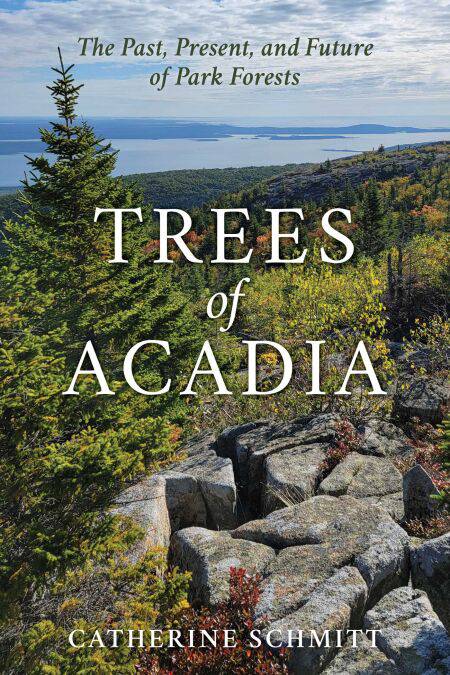
The sharp spires of spruce and fir perched atop Otter Cliffs, streaks of pitch pines on the ledges of the Beehive, gnarled birches on Cadillac Mountain, and the jack pines at Schoodic Point, Acadia National Park would not be Acadia if not for the trees.
The most common ecosystem across the park, forests support a diversity of wildlife, protect lakes and streams, clean the air, and pull carbon dioxide out of the atmosphere. Acadia’s woods, protected for well over a century, are special. Though the evergreen forest of spruce and fir covers most of the park, Acadia’s woods are not one forest, but many. They are some of the oldest and healthiest forests in the eastern United States. Acadia’s trees, in a transition zone between northern boreal forest and southern temperate forests, support a unique assemblage of plants, animals, lichen, and moss.
It was concern for the future of the trees that inspired the creation of the park more than a century ago and today these special woodlands are at risk. Acadia’s forests are cared for by park scientists who measure and monitor trees to ensure their future—a future of increasing uncertainty in a changing climate. Their work, the science behind the scenery, has generated an incredible amount of knowledge about Acadia’s trees.
With these experts as guides, and with history and hundreds of original, full-color photos as inspiration, travel the trails of Acadia to learn about trees through all four seasons, from the balsam fir on the summit of Cadillac Mountain and blazing maples of the Jesup Path in autumn, to hemlocks toppled by winter storms and ash trees illuminated by spring sunlight. Gain a new understanding of and appreciation for the trees and forests of Acadia National Park, and in turn for forests everywhere.
The most common ecosystem across the park, forests support a diversity of wildlife, protect lakes and streams, clean the air, and pull carbon dioxide out of the atmosphere. Acadia’s woods, protected for well over a century, are special. Though the evergreen forest of spruce and fir covers most of the park, Acadia’s woods are not one forest, but many. They are some of the oldest and healthiest forests in the eastern United States. Acadia’s trees, in a transition zone between northern boreal forest and southern temperate forests, support a unique assemblage of plants, animals, lichen, and moss.
It was concern for the future of the trees that inspired the creation of the park more than a century ago and today these special woodlands are at risk. Acadia’s forests are cared for by park scientists who measure and monitor trees to ensure their future—a future of increasing uncertainty in a changing climate. Their work, the science behind the scenery, has generated an incredible amount of knowledge about Acadia’s trees.
With these experts as guides, and with history and hundreds of original, full-color photos as inspiration, travel the trails of Acadia to learn about trees through all four seasons, from the balsam fir on the summit of Cadillac Mountain and blazing maples of the Jesup Path in autumn, to hemlocks toppled by winter storms and ash trees illuminated by spring sunlight. Gain a new understanding of and appreciation for the trees and forests of Acadia National Park, and in turn for forests everywhere.
Specificaties
Betrokkenen
- Auteur(s):
- Uitgeverij:
Inhoud
- Aantal bladzijden:
- 240
- Taal:
- Engels
Eigenschappen
- Productcode (EAN):
- 9781684752256
- Verschijningsdatum:
- 27/04/2026
- Uitvoering:
- E-book
- Beveiligd met:
- Adobe DRM
- Formaat:
- ePub


Alleen bij Standaard Boekhandel
+ 20 punten op je klantenkaart van Standaard Boekhandel

Beoordelingen
We publiceren alleen reviews die voldoen aan de voorwaarden voor reviews. Bekijk onze voorwaarden voor reviews.