


- Afhalen na 1 uur in een winkel met voorraad
- Gratis thuislevering in België vanaf € 30
- Ruim aanbod met 7 miljoen producten
- Afhalen na 1 uur in een winkel met voorraad
- Gratis thuislevering in België vanaf € 30
- Ruim aanbod met 7 miljoen producten





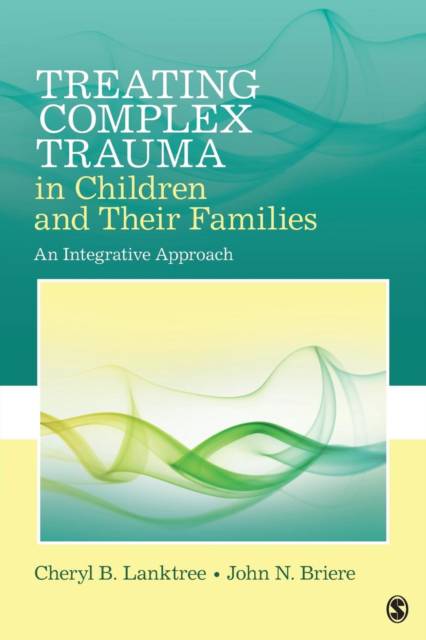
Treating Complex Trauma in Children and Their Families
An Integrative Approach
Cheryl B Lanktree, John N Briere
Paperback | Engels
€ 181,95
+ 363 punten
Omschrijving
"This is a must-read for clinicians who help traumatized children and their families. Lanktree and Briere have developed and tested an accessible, integrated, assessment-driven model that recognizes the ample impact of trauma on young children in different social contexts. A valuable alternative to rigidly manualized treatments, this book relies on clinical judgment and customized planning."
Eliana Gil
Gil Institute for Trauma Recovery and Education
One of the few books on the treatment of psychological trauma in children that provides specific, in-depth individual, group, and family therapy interventions for complex psychological trauma, this practical book focuses on the treatment of 6-12 year-old children and their family members. The authors employ an evidence-based, yet flexible and individualized treatment model, Integrative Treatment of Complex Trauma for Children (ITCT-C), as they address the use of play therapy and other expressive approaches, attachment processing, multi-target titrated exposure, mindfulness techniques, psychoeducation, and affect regulation skill development, as well as interventions with family/caretaker and community systems. The authors emphasize a culturally sensitive and empowering perspective, one that addresses the effects of social marginalization and supports not only recovery, but also posttraumatic growth. Clinical examples and specific tools, such as the Assessment Treatment Flowchart (ATF-C), illustrate how assessment can be used to guide individualized and developmentally-appropriate interventions.
Eliana Gil
Gil Institute for Trauma Recovery and Education
One of the few books on the treatment of psychological trauma in children that provides specific, in-depth individual, group, and family therapy interventions for complex psychological trauma, this practical book focuses on the treatment of 6-12 year-old children and their family members. The authors employ an evidence-based, yet flexible and individualized treatment model, Integrative Treatment of Complex Trauma for Children (ITCT-C), as they address the use of play therapy and other expressive approaches, attachment processing, multi-target titrated exposure, mindfulness techniques, psychoeducation, and affect regulation skill development, as well as interventions with family/caretaker and community systems. The authors emphasize a culturally sensitive and empowering perspective, one that addresses the effects of social marginalization and supports not only recovery, but also posttraumatic growth. Clinical examples and specific tools, such as the Assessment Treatment Flowchart (ATF-C), illustrate how assessment can be used to guide individualized and developmentally-appropriate interventions.
Specificaties
Betrokkenen
- Auteur(s):
- Uitgeverij:
Inhoud
- Aantal bladzijden:
- 296
- Taal:
- Engels
Eigenschappen
- Productcode (EAN):
- 9781452282640
- Verschijningsdatum:
- 3/02/2016
- Uitvoering:
- Paperback
- Formaat:
- Trade paperback (VS)
- Afmetingen:
- 150 mm x 226 mm
- Gewicht:
- 385 g


Alleen bij Standaard Boekhandel
+ 363 punten op je klantenkaart van Standaard Boekhandel
Cadeau

AANGERADEN


Beoordelingen
We publiceren alleen reviews die voldoen aan de voorwaarden voor reviews. Bekijk onze voorwaarden voor reviews.