


- Afhalen na 1 uur in een winkel met voorraad
- Gratis thuislevering in België vanaf € 30
- Ruim aanbod met 7 miljoen producten
- Afhalen na 1 uur in een winkel met voorraad
- Gratis thuislevering in België vanaf € 30
- Ruim aanbod met 7 miljoen producten





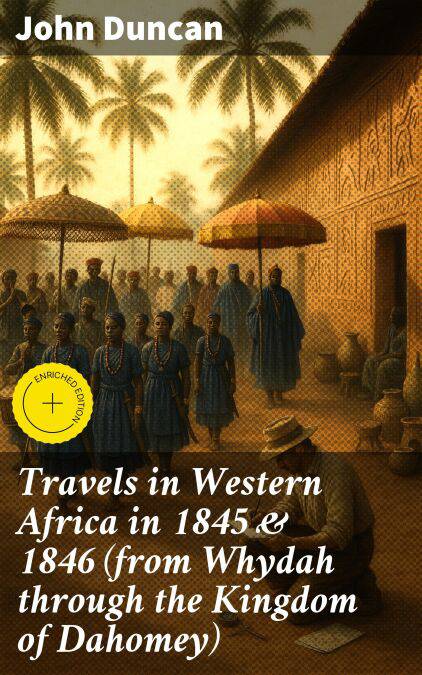
Travels in Western Africa in 1845 & 1846 (from Whydah through the Kingdom of Dahomey) E-BOOK
Enriched edition. Journey Through Dahomey: Exploring 19th Century West Africa
John Duncan
E-book | Engels
€ 0,99
€ 1,99
Omschrijving
In "Travels in Western Africa in 1845 & 1846," John Duncan presents a vivid and detailed account of his explorations through the coastal regions of Whydah and the Kingdom of Dahomey. Written in a robust, descriptive narrative style, the text captures not only the lush landscapes and complex cultures of West Africa but also the socio-political dynamics of the time. Duncan's observations, infused with ethnographic detail and personal reflection, lend an invaluable perspective to the literary corpus on African exploration during the mid-19th century, a period marked by European colonial interest and the transatlantic slave trade. John Duncan was a passionate traveler and an observant chronicler whose experiences in West Africa were shaped by his keen interest in diverse cultures and societies. His background, influenced by the imperial attitudes of his time, is evident in his nuanced examinations of the societies he encountered. Duncan's commitment to accurately portraying the peoples and practices of Dahomey underscores a burgeoning awareness of cultural relativism that began to challenge the simplistic narratives prevalent in his day. This work is highly recommended for readers interested in historical travel literature, ethnography, and colonial studies. Duncan's unique insights and engaging prose provide not only a window into 19th-century Africa but also provoke thoughtful discussions on the implications of exploration and colonialism that resonate to this day.
In this enriched edition, we have carefully created added value for your reading experience:
- Hand‐picked Memorable Quotes shine a spotlight on moments of literary brilliance.
- Interactive footnotes clarify unusual references, historical allusions, and archaic phrases for an effortless, more informed read.
In this enriched edition, we have carefully created added value for your reading experience:
- Hand‐picked Memorable Quotes shine a spotlight on moments of literary brilliance.
- Interactive footnotes clarify unusual references, historical allusions, and archaic phrases for an effortless, more informed read.
Specificaties
Betrokkenen
- Auteur(s):
- Uitgeverij:
Inhoud
- Aantal bladzijden:
- 184
- Taal:
- Engels
Eigenschappen
- Productcode (EAN):
- 4064066434694
- Verschijningsdatum:
- 8/07/2023
- Uitvoering:
- E-book
- Beveiligd met:
- Digital watermarking
- Formaat:
- ePub


Alleen bij Standaard Boekhandel
Cadeau

AANGERADEN


Beoordelingen
We publiceren alleen reviews die voldoen aan de voorwaarden voor reviews. Bekijk onze voorwaarden voor reviews.