


- Afhalen na 1 uur in een winkel met voorraad
- Gratis thuislevering in België vanaf € 30
- Ruim aanbod met 7 miljoen producten
- Afhalen na 1 uur in een winkel met voorraad
- Gratis thuislevering in België vanaf € 30
- Ruim aanbod met 7 miljoen producten




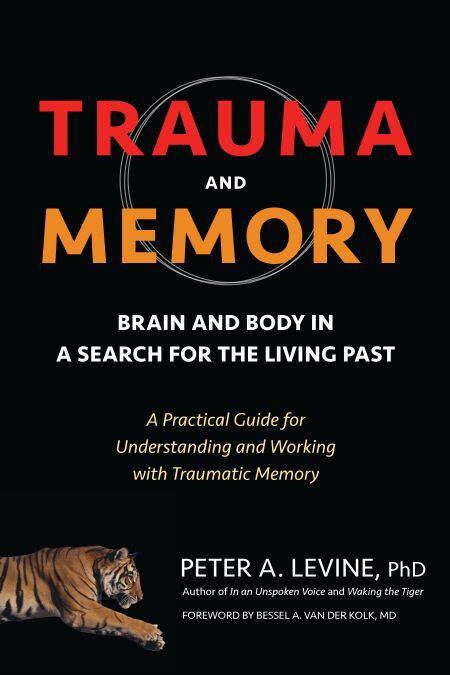
Trauma and Memory E-BOOK
Brain and Body in a Search for the Living Past: A Practical Guide for Understanding and Working with Traumatic Memory
Peter A. Levine, Ph.D.
E-book | Engels
€ 1,96
+ 1 punten
Uitvoering
Omschrijving
Designed for psychotherapists and their clients, Peter Levine's latest best-seller continues his groundbreaking exploration of the central role of the body in processing—and healing—trauma.
With foreword by Bessel van der Kolk, author of The Body Keeps the Score
In Trauma and Memory, bestselling author Dr. Peter Levine (creator of the Somatic Experiencing approach) tackles one of the most difficult and controversial questions of PTSD/trauma therapy: Can we trust our memories? While some argue that traumatic memories are unreliable and not useful, others insist that we absolutely must rely on memory to make sense of past experience. Building on his 45 years of successful treatment of trauma and utilizing case studies from his own practice, Dr. Levine suggests that there are elements of truth in both camps. While acknowledging that memory can be trusted, he argues that the only truly useful memories are those that might initially seem to be the least reliable: memories stored in the body and not necessarily accessible by our conscious mind.
While much work has been done in the field of trauma studies to address "explicit" traumatic memories in the brain (such as intrusive thoughts or flashbacks), much less attention has been paid to how the body itself stores "implicit" memory, and how much of what we think of as "memory" actually comes to us through our (often unconsciously accessed) felt sense. By learning how to better understand this complex interplay of past and present, brain and body, we can adjust our relationship to past trauma and move into a more balanced, relaxed state of being. Written for trauma sufferers as well as mental health care practitioners, Trauma and Memory is a groundbreaking look at how memory is constructed and how influential memories are on our present state of being.
With foreword by Bessel van der Kolk, author of The Body Keeps the Score
In Trauma and Memory, bestselling author Dr. Peter Levine (creator of the Somatic Experiencing approach) tackles one of the most difficult and controversial questions of PTSD/trauma therapy: Can we trust our memories? While some argue that traumatic memories are unreliable and not useful, others insist that we absolutely must rely on memory to make sense of past experience. Building on his 45 years of successful treatment of trauma and utilizing case studies from his own practice, Dr. Levine suggests that there are elements of truth in both camps. While acknowledging that memory can be trusted, he argues that the only truly useful memories are those that might initially seem to be the least reliable: memories stored in the body and not necessarily accessible by our conscious mind.
While much work has been done in the field of trauma studies to address "explicit" traumatic memories in the brain (such as intrusive thoughts or flashbacks), much less attention has been paid to how the body itself stores "implicit" memory, and how much of what we think of as "memory" actually comes to us through our (often unconsciously accessed) felt sense. By learning how to better understand this complex interplay of past and present, brain and body, we can adjust our relationship to past trauma and move into a more balanced, relaxed state of being. Written for trauma sufferers as well as mental health care practitioners, Trauma and Memory is a groundbreaking look at how memory is constructed and how influential memories are on our present state of being.
Specificaties
Betrokkenen
- Auteur(s):
- Uitgeverij:
Inhoud
- Aantal bladzijden:
- 206
- Taal:
- Engels
Eigenschappen
- Productcode (EAN):
- 9781583949955
- Verschijningsdatum:
- 26/10/2015
- Uitvoering:
- E-book
- Beveiligd met:
- Adobe DRM
- Formaat:
- ePub


Alleen bij Standaard Boekhandel
+ 1 punten op je klantenkaart van Standaard Boekhandel
CADEAU

AANGERADEN


Beoordelingen
We publiceren alleen reviews die voldoen aan de voorwaarden voor reviews. Bekijk onze voorwaarden voor reviews.