


- Afhalen na 1 uur in een winkel met voorraad
- Gratis thuislevering in België vanaf € 30
- Ruim aanbod met 7 miljoen producten
- Afhalen na 1 uur in een winkel met voorraad
- Gratis thuislevering in België vanaf € 30
- Ruim aanbod met 7 miljoen producten





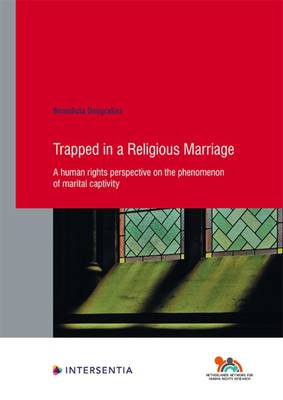
Trapped in a Religious Marriage
A Human Rights Perspective on the Phenomenon of Marital Captivity Volume 86
Benedicta Deogratias
€ 107,00
+ 214 punten
Omschrijving
This book offers a human rights perspective of the phenomenon of marital captivity within Christian, Jewish, Hindu and Muslim communities in both secular and non-secular States. Marital captivity is a complex social phenomenon that, predominantly, affects women. It involves a situation wherein the dissolution of a religious and/or legal marriage is obscured for religious reasons, consequently forcing the spouse(s) to remain in the marriage against their will. It involves multiple stakeholders (i.e. the trapped spouse, the opposing or recalcitrant spouse, the religious communities and one or more States). Within situations of marital captivity, all involved stakeholders have rights and interests which are often in conflict with one another. Unfortunately, holistic and effective solutions to end existing situations of marital captivity and prevent new situations from arising have yet to be developed.The human rights discourse advanced in this book shows that a human rights centred approach is imperative for the process of finding effective solutions to end marital captivity. Applying the human rights legal framework enables to objectively consider, balance and resolve the conflicting rights and interests inherent within situations of marital captivity. It also reveals how a select number of human rights and principles are affected within situations of marital captivity and offers an overview of States' positive obligations to protect and ensure these rights. The implied human rights obligations are discussed within the context of marital captivity so as to identify and formulate specific States' obligations to address marital captivity. This enables the author to produce guidelines for legal and non-legal measures that States should consider adopting in their efforts to combat marital captivity and to comply with their human rights obligations.
Specificaties
Betrokkenen
- Auteur(s):
- Uitgeverij:
Inhoud
- Aantal bladzijden:
- 396
- Taal:
- Engels
- Reeks:
- Reeksnummer:
- nr. 86
Eigenschappen
- Productcode (EAN):
- 9781780688428
- Verschijningsdatum:
- 30/06/2020
- Uitvoering:
- Paperback
- Formaat:
- Trade paperback (VS)
- Afmetingen:
- 170 mm x 240 mm
- Gewicht:
- 662 g


Alleen bij Standaard Boekhandel
+ 214 punten op je klantenkaart van Standaard Boekhandel
Cadeau

AANGERADEN


Beoordelingen
We publiceren alleen reviews die voldoen aan de voorwaarden voor reviews. Bekijk onze voorwaarden voor reviews.