


- Afhalen na 1 uur in een winkel met voorraad
- Gratis thuislevering in België vanaf € 30
- Ruim aanbod met 7 miljoen producten
- Afhalen na 1 uur in een winkel met voorraad
- Gratis thuislevering in België vanaf € 30
- Ruim aanbod met 7 miljoen producten





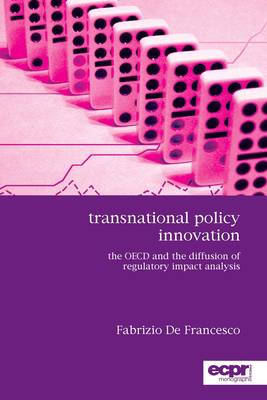
Transnational Policy Innovation
The OECD and the Diffusion of Regulatory Impact Analysis
Fabrizio de Francesco
€ 58,95
+ 117 punten
Omschrijving
This book analyses the role of the OECD in diffusing policy innovations. Through the study of regulatory impact analysis (RIA), it shows how transnational networks affect national policy process. De Francesco's analytical framework encompasses the institutional features as well as internal and international determinants of a policy innovation such as RIA. Drawing on original data sets, three empirical analyses assess to what extent government decisions to adopt, implement, and evaluate RIA were driven by the OECD. Transnational Policy Innovation argues that concepts of policy innovation diffusion provide a useful framework for understanding the dynamics of transnational governance. It shows that the OECD has been successful in framing and diffusing a template of evidence-based decision making. However, downplaying RIA as an instrument of political control has limited the influence of the OECD's peer review and comparative indicators on the administrative and institutional setting.
Specificaties
Betrokkenen
- Auteur(s):
- Uitgeverij:
Inhoud
- Aantal bladzijden:
- 224
- Taal:
- Engels
- Reeks:
Eigenschappen
- Productcode (EAN):
- 9781907301254
- Verschijningsdatum:
- 1/08/2013
- Uitvoering:
- Paperback
- Formaat:
- Trade paperback (VS)
- Afmetingen:
- 156 mm x 234 mm
- Gewicht:
- 317 g


Alleen bij Standaard Boekhandel
+ 117 punten op je klantenkaart van Standaard Boekhandel
Cadeau

AANGERADEN


Beoordelingen
We publiceren alleen reviews die voldoen aan de voorwaarden voor reviews. Bekijk onze voorwaarden voor reviews.