


- Afhalen na 1 uur in een winkel met voorraad
- Gratis thuislevering in België vanaf € 30
- Ruim aanbod met 7 miljoen producten
- Afhalen na 1 uur in een winkel met voorraad
- Gratis thuislevering in België vanaf € 30
- Ruim aanbod met 7 miljoen producten





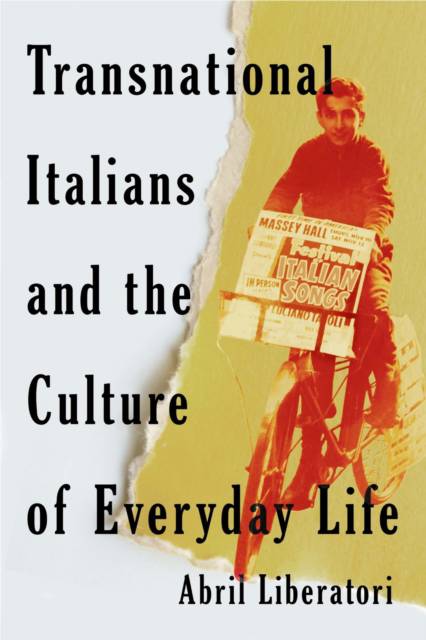
Transnational Italians and the Culture of Everyday Life
Abril Liberatori
€ 49,95
+ 99 punten
Omschrijving
Departing from conventional community-based histories, this innovative work examines how immigrant identities are transformed into transnational ones. Focusing on families from the Campania region of Italy who settled in Toronto, Ontario, and Buenos Aires, Argentina, after 1945, Transnational Italians and the Culture of Everyday Life demonstrates why ethnic identity is best understood as a transnational construct - shaped by migrants' mobility and the global dispersal of extended families and kin networks.
Drawing from more than two dozen oral histories, Abril Liberatori places migrants' narratives at the centre of her book. Alongside a range of archival materials - including song lyrics, recipes, and advertisements - these stories show how transnationalism is articulated through everyday cultural practices around food, music, gender, and language. Imported goods from Campania mixed with local foods and traditional cooking methods; Neapolitan song culture, canzone napoletana, indisputably fostered a common group identity across borders; and a private network of bonds between Campani women eased the hardship of migration. Sites of everyday life became rich arenas of cultural entanglements that brought together families and strangers from across Europe, the Americas, and beyond. Transnational Italians and the Culture of Everyday Life will engage not only historians but also those interested in local community histories and the connection to Italian diasporas across the globe.Specificaties
Betrokkenen
- Auteur(s):
- Uitgeverij:
Inhoud
- Aantal bladzijden:
- 204
- Taal:
- Engels
- Reeks:
- Reeksnummer:
- nr. 226
Eigenschappen
- Productcode (EAN):
- 9780228027836
- Verschijningsdatum:
- 7/07/2026
- Uitvoering:
- Paperback
- Formaat:
- Trade paperback (VS)
- Afmetingen:
- 152 mm x 229 mm
- Gewicht:
- 453 g



Alleen bij Standaard Boekhandel
+ 99 punten op je klantenkaart van Standaard Boekhandel
Cadeau

AANGERADEN


Beoordelingen
We publiceren alleen reviews die voldoen aan de voorwaarden voor reviews. Bekijk onze voorwaarden voor reviews.