


- Afhalen na 1 uur in een winkel met voorraad
- Gratis thuislevering in België vanaf € 30
- Ruim aanbod met 7 miljoen producten
- Afhalen na 1 uur in een winkel met voorraad
- Gratis thuislevering in België vanaf € 30
- Ruim aanbod met 7 miljoen producten





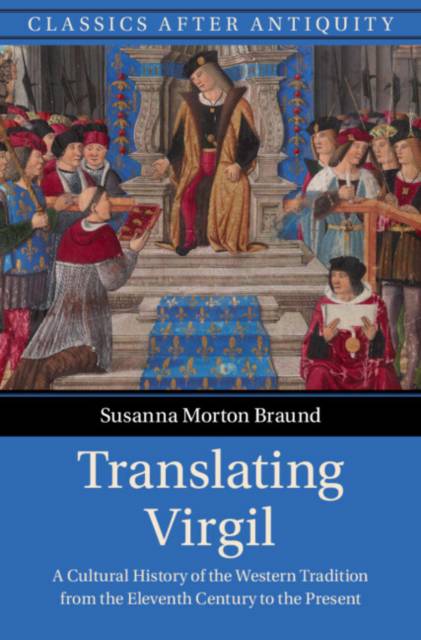
Translating Virgil
A Cultural History of the Western Tradition from the Eleventh Century to the Present
Susanna Morton Braund
€ 314,45
+ 628 punten
Omschrijving
Virgil remains one of the most important poets in the history of literature. This emerges in the rich translation history of his poems. Hardly a European language exists into which at least one of his poems has not been translated, from Basque to Ukrainian and Dutch to Turkish. Susanna Braund's book is the first synthesis and analysis of this history. It asks when, where, why, by whom, for whom and how Virgil's poems were translated into a range of languages. Chronologically it spans the eleventh- and twelfth-century adaptations of the Aeneid down to present-day translation activity, in which women are better represented than in earlier eras. The book makes a major contribution to western intellectual history. It challenges classicists and other literary scholars to reassess the features of Virgil's poems to which the translators respond and offers a treasure-trove of insights to translation theorists and classicists alike.
Specificaties
Betrokkenen
- Auteur(s):
- Uitgeverij:
Inhoud
- Aantal bladzijden:
- 1022
- Taal:
- Engels
- Reeks:
Eigenschappen
- Productcode (EAN):
- 9781108470612
- Verschijningsdatum:
- 5/06/2025
- Uitvoering:
- Hardcover
- Formaat:
- Genaaid
- Afmetingen:
- 163 mm x 233 mm
- Gewicht:
- 1592 g



Alleen bij Standaard Boekhandel
+ 628 punten op je klantenkaart van Standaard Boekhandel
Cadeau

AANGERADEN


Beoordelingen
We publiceren alleen reviews die voldoen aan de voorwaarden voor reviews. Bekijk onze voorwaarden voor reviews.