


- Afhalen na 1 uur in een winkel met voorraad
- Gratis thuislevering in België vanaf € 30
- Ruim aanbod met 7 miljoen producten
- Afhalen na 1 uur in een winkel met voorraad
- Gratis thuislevering in België vanaf € 30
- Ruim aanbod met 7 miljoen producten





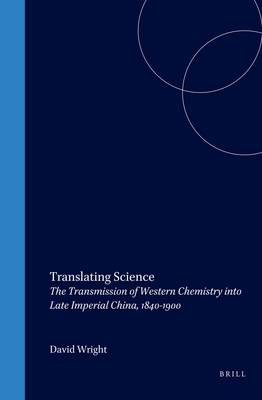
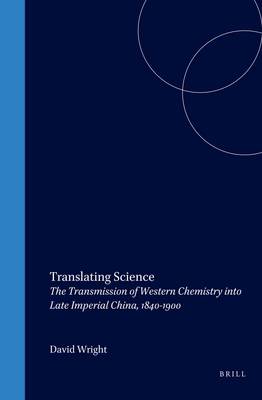
Translating Science
The Transmission of Western Chemistry Into Late Imperial China, 1840-1900
David C Wright
€ 460,95
+ 921 punten
Omschrijving
How did the Chinese in the 19th century deal with the enormous influx of Western science? What were the patterns behind this watershed in Chinese intellectual history?
This work deals with those responsible for the translation of science, the major issues they were confronted with, and their struggles; the Chinese translators' views of its overpowering influence on, and interaction with their own great tradition, those of the missionary-translators who used natural theology to propagate the Gospel, and those of John Fryer, a 'secular missionary', who founded the Shanghai Polytechnic and edited the Chinese Scientific Magazine.
With due attention for the techniques of translation, the formation of new terms, the mechanisms behind the 'struggle for survival' between the, in this case, chemical terms, all amply illustrated at the hand of original texts.
The final chapter charts the intellectual influence of Western science, the role of the scientific metaphor in political discourse, and the translation of science from a collection of mere 'techniques' to a source of political inspiration.
This work deals with those responsible for the translation of science, the major issues they were confronted with, and their struggles; the Chinese translators' views of its overpowering influence on, and interaction with their own great tradition, those of the missionary-translators who used natural theology to propagate the Gospel, and those of John Fryer, a 'secular missionary', who founded the Shanghai Polytechnic and edited the Chinese Scientific Magazine.
With due attention for the techniques of translation, the formation of new terms, the mechanisms behind the 'struggle for survival' between the, in this case, chemical terms, all amply illustrated at the hand of original texts.
The final chapter charts the intellectual influence of Western science, the role of the scientific metaphor in political discourse, and the translation of science from a collection of mere 'techniques' to a source of political inspiration.
Specificaties
Betrokkenen
- Auteur(s):
- Uitgeverij:
Inhoud
- Aantal bladzijden:
- 558
- Taal:
- Engels
- Reeks:
- Reeksnummer:
- nr. 48
Eigenschappen
- Productcode (EAN):
- 9789004117761
- Verschijningsdatum:
- 30/10/2000
- Uitvoering:
- Hardcover
- Formaat:
- Genaaid
- Afmetingen:
- 166 mm x 246 mm
- Gewicht:
- 1152 g


Alleen bij Standaard Boekhandel
+ 921 punten op je klantenkaart van Standaard Boekhandel
CADEAU


Beoordelingen
We publiceren alleen reviews die voldoen aan de voorwaarden voor reviews. Bekijk onze voorwaarden voor reviews.