


- Afhalen na 1 uur in een winkel met voorraad
- Gratis thuislevering in België vanaf € 30
- Ruim aanbod met 7 miljoen producten
- Afhalen na 1 uur in een winkel met voorraad
- Gratis thuislevering in België vanaf € 30
- Ruim aanbod met 7 miljoen producten





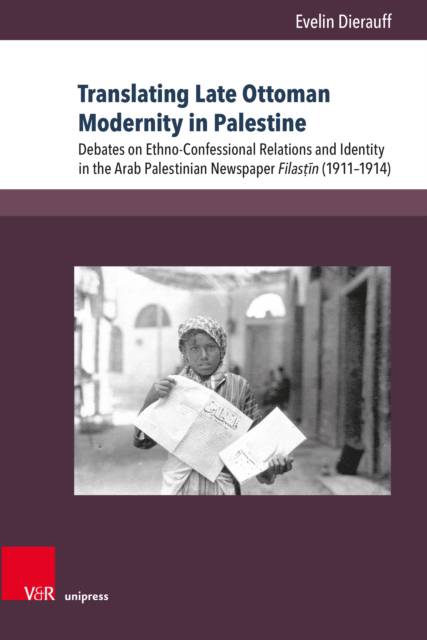
Translating Late Ottoman Modernity in Palestine
Debates on Ethno-Confessional Relations and Identity in the Arab Palestinian Newspaper Filastin (1911-1914)
Evelin Dierauff
€ 77,95
+ 155 punten
Omschrijving
Filastin was published from 1911 onwards in the coastal town of Jaffa by the cousins Yusuf and Isa al-Isa, Arab Palestinians of Greek Orthodox confession. Soon, it had established itself as a 'forum of debate' in late Ottoman Palestine, serving a pool of authors from different ethnic and confessional but similar educational backgrounds and moral values as a public medium to which they contributed through publishing articles, protest letters, petitions, etc. On its pages, these authors controversially discussed concepts of collective identity, society-building, political order and all kinds of reforms that they perceived progressive and as fitting the 'spirit of the age', as they called it: the age of Ottoman Constitutionalism and modernity. This study explores local debates on Palestinian group relations through Filastin during the years 1911 until 1914 which is relevant since, during this period of time, the Arab Middle East in general and Palestine in specific underwent a so-called 'saddle period'; a deep and fundamental change with regard to social relations and political concepts that is still rather unexplored in today's scholarship.
Specificaties
Betrokkenen
- Auteur(s):
- Uitgeverij:
Inhoud
- Aantal bladzijden:
- 456
- Taal:
- Engels
- Reeks:
- Reeksnummer:
- nr. 2
Eigenschappen
- Productcode (EAN):
- 9783847110668
- Verschijningsdatum:
- 20/01/2020
- Uitvoering:
- Hardcover
- Formaat:
- Genaaid
- Afmetingen:
- 157 mm x 231 mm
- Gewicht:
- 816 g


Alleen bij Standaard Boekhandel
+ 155 punten op je klantenkaart van Standaard Boekhandel
Cadeau

AANGERADEN


Beoordelingen
We publiceren alleen reviews die voldoen aan de voorwaarden voor reviews. Bekijk onze voorwaarden voor reviews.