


- Afhalen na 1 uur in een winkel met voorraad
- Gratis thuislevering in België vanaf € 30
- Ruim aanbod met 7 miljoen producten
- Afhalen na 1 uur in een winkel met voorraad
- Gratis thuislevering in België vanaf € 30
- Ruim aanbod met 7 miljoen producten





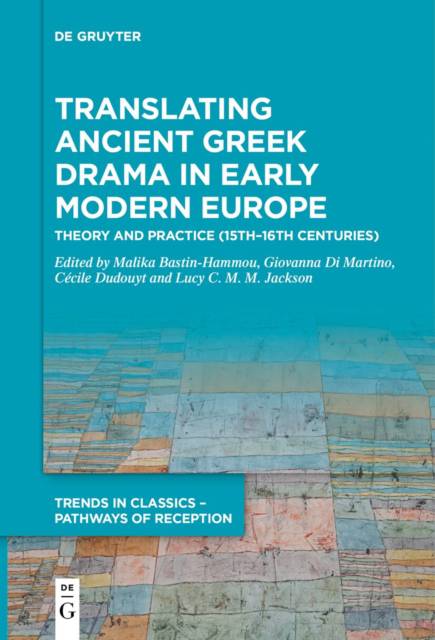
Translating Ancient Greek Drama in Early Modern Europe
Theory and Practice (15th-16th Centuries)
€ 20,95
+ 41 punten
Omschrijving
The volume brings together contributions on 15th and 16th century translation throughout Europe (in particular Italy, France, Spain, Portugal, Germany, and England).
Whilst studies of the reception of ancient Greek drama in this period have generally focused on one national tradition, this book widens the geographical and linguistic scope so as to approach it as a European phenomenon. Latin translations are particularly emblematic of this broader scope: translators from all over Europe latinised Greek drama and, as they did so, developed networks of translators and practices of translation that could transcend national borders. The chapters collected here demonstrate that translation theory and practice did not develop in national isolation, but were part of a larger European phenomenon, nourished by common references to Biblical and Greco-Roman antiquities, and honed by common religious and scholarly controversies. In addition to situating these texts in the wider context of the reception of Greek drama in the early modern period, this volume opens avenues for theoretical debate about translation practices and discourses on translation, and on how they map on to twenty-first-century terminology.
Whilst studies of the reception of ancient Greek drama in this period have generally focused on one national tradition, this book widens the geographical and linguistic scope so as to approach it as a European phenomenon. Latin translations are particularly emblematic of this broader scope: translators from all over Europe latinised Greek drama and, as they did so, developed networks of translators and practices of translation that could transcend national borders. The chapters collected here demonstrate that translation theory and practice did not develop in national isolation, but were part of a larger European phenomenon, nourished by common references to Biblical and Greco-Roman antiquities, and honed by common religious and scholarly controversies. In addition to situating these texts in the wider context of the reception of Greek drama in the early modern period, this volume opens avenues for theoretical debate about translation practices and discourses on translation, and on how they map on to twenty-first-century terminology.
Specificaties
Betrokkenen
- Uitgeverij:
Inhoud
- Aantal bladzijden:
- 361
- Taal:
- Engels
- Reeks:
- Reeksnummer:
- nr. 5
Eigenschappen
- Productcode (EAN):
- 9783111619781
- Verschijningsdatum:
- 4/11/2024
- Uitvoering:
- Paperback
- Formaat:
- Trade paperback (VS)
- Afmetingen:
- 156 mm x 234 mm
- Gewicht:
- 508 g

Alleen bij Standaard Boekhandel
+ 41 punten op je klantenkaart van Standaard Boekhandel
Cadeau

AANGERADEN


Beoordelingen
We publiceren alleen reviews die voldoen aan de voorwaarden voor reviews. Bekijk onze voorwaarden voor reviews.