


- Afhalen na 1 uur in een winkel met voorraad
- Gratis thuislevering in België vanaf € 30
- Ruim aanbod met 7 miljoen producten
- Afhalen na 1 uur in een winkel met voorraad
- Gratis thuislevering in België vanaf € 30
- Ruim aanbod met 7 miljoen producten





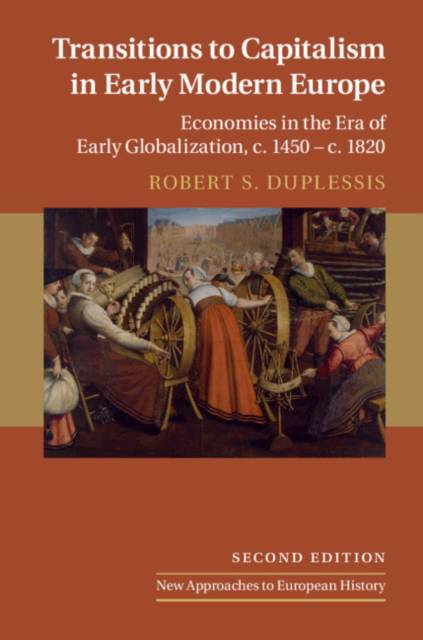
Transitions to Capitalism in Early Modern Europe
Economies in the Era of Early Globalization, C. 1450 - C. 1820
Robert S Duplessis
€ 56,45
+ 112 punten
Uitvoering
Omschrijving
Between the end of the Middle Ages and the early nineteenth century, the long-established structures and practices of European trade, agriculture, and industry were disparately but profoundly transformed. Revised, updated, and expanded, this second edition of Transitions to Capitalism in Early Modern Europe narrates and analyses the diverse trends that greatly enlarged European commerce, permanently modified rural and urban production, gave birth to new social classes, remade consumer habits, and altered global economic geographies, culminating in capitalist industrial revolution. Broad in chronological and geographical scope and explicitly comparative, Robert S. DuPlessis' book introduces readers to a wealth of information drawn from throughout Eastern, Western and Mediterranean Europe, as well as to classic interpretations, current debates, new scholarship, and suggestions for further reading.
Specificaties
Betrokkenen
- Auteur(s):
- Uitgeverij:
Inhoud
- Aantal bladzijden:
- 390
- Taal:
- Engels
- Reeks:
- Reeksnummer:
- nr. 60
Eigenschappen
- Productcode (EAN):
- 9781108405553
- Verschijningsdatum:
- 26/09/2019
- Uitvoering:
- Paperback
- Formaat:
- Trade paperback (VS)
- Afmetingen:
- 163 mm x 230 mm
- Gewicht:
- 589 g



Alleen bij Standaard Boekhandel
+ 112 punten op je klantenkaart van Standaard Boekhandel
Cadeau

AANGERADEN


Beoordelingen
We publiceren alleen reviews die voldoen aan de voorwaarden voor reviews. Bekijk onze voorwaarden voor reviews.