


- Afhalen na 1 uur in een winkel met voorraad
- Gratis thuislevering in België vanaf € 30
- Ruim aanbod met 7 miljoen producten
- Afhalen na 1 uur in een winkel met voorraad
- Gratis thuislevering in België vanaf € 30
- Ruim aanbod met 7 miljoen producten





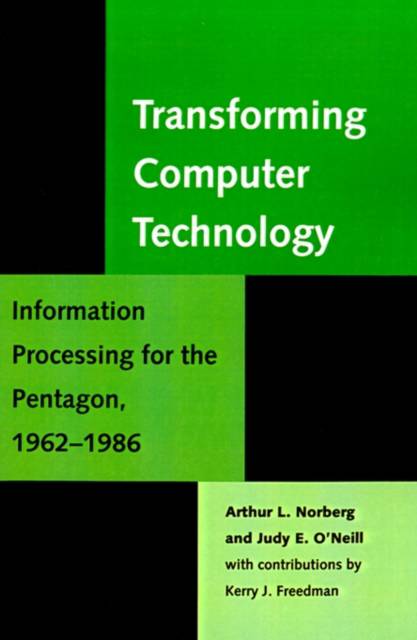
Transforming Computer Technology
Information Processing for the Pentagon, 1962-1986
Arthur L Norberg, Judy E O'Neill
€ 67,95
+ 135 punten
Omschrijving
Over the course of several decades, the Pentagon's Information Processing Techniques Office (IPTO) helped transform computing from a cumbersome enterprise based on batch processing to the instantly interactive, graphically rich, highly intelligent computing of today. With the purpose of improving command and control systems for the military, IPTO researchers strengthened time-sharing, laid the groundwork for graphics and parallel processing, contributed to the study of artificial intelligence, and developed the wide-area network that came to be known as the Internet. Transforming Computer Technology examines these and other developments at the Defense Department's Advanced Research Projects Agency in its heyday between 1962 and 1986. The authors show how Pentagon programs affected significant developments in both computer science and engineering. They analyze the management of the office, the origins and growth of important IPTO programs, and the interaction of the staff with the R&D community. They pay special attention to IPTO's role in executing research at the leading edge of computing and networking and in working with the military to transfer that research into practical use. And they show how, by the 1990s, the research results had been assimilated into systems both for the military and for civilian society.
Specificaties
Betrokkenen
- Auteur(s):
- Uitgeverij:
Inhoud
- Aantal bladzijden:
- 384
- Taal:
- Engels
- Reeks:
- Reeksnummer:
- nr. 18
Eigenschappen
- Productcode (EAN):
- 9780801863691
- Verschijningsdatum:
- 1/02/2000
- Uitvoering:
- Paperback
- Formaat:
- Trade paperback (VS)
- Afmetingen:
- 152 mm x 228 mm
- Gewicht:
- 607 g


Alleen bij Standaard Boekhandel
+ 135 punten op je klantenkaart van Standaard Boekhandel
Cadeau

AANGERADEN


Beoordelingen
We publiceren alleen reviews die voldoen aan de voorwaarden voor reviews. Bekijk onze voorwaarden voor reviews.