


- Afhalen na 1 uur in een winkel met voorraad
- Gratis thuislevering in België vanaf € 30
- Ruim aanbod met 7 miljoen producten
- Afhalen na 1 uur in een winkel met voorraad
- Gratis thuislevering in België vanaf € 30
- Ruim aanbod met 7 miljoen producten





Transforming Citizenship Set
Democracy, Membership, and Belonging in Latino Communities
Raymond A Rocco
€ 48,45
+ 96 punten
Omschrijving
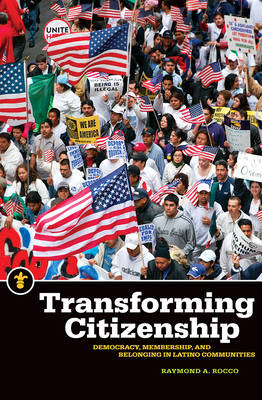
In Transforming Citizenship Raymond Rocco studies the "exclusionary inclusion" of Latinos based on racialization and how the processes behind this have shaped their marginalized citizenship status, offering a framework for explaining this dynamic. Contesting this status has been at the core of Latino politics for more than 150 years. Pursuing the goal of full, equal, and just inclusion in societal membership has long been a major part of the struggle to realize democratic normative principles. This illuminating research demonstrates the inherent limitations of the citizenship regime in the United States for incorporating Latinos as full societal members and offers an alternative conception, "associative citizenship," that provides a way to account for and challenge the pattern of exclusionary belonging that has defined the positions of the Latinos in U.S. society. Through a critical engagement with key theorists such as Rawls, Habermas, Kymlicka, Walzer, Taylor, and Young, Rocco advances an original analysis of the politics of Latino societal membership and citizenship, arguing that the specific processes of racialization that have played a determinative role in creating and maintaining the pattern of social and political exclusions of Latinos have not been addressed by the dominant theories of diversity and citizenship developed in the prevalent literature in political theory.
Specificaties
Betrokkenen
- Auteur(s):
- Uitgeverij:
Inhoud
- Aantal bladzijden:
- 278
- Taal:
- Engels
- Reeks:
Eigenschappen
- Productcode (EAN):
- 9781611861334
- Verschijningsdatum:
- 1/07/2014
- Uitvoering:
- Paperback
- Formaat:
- Trade paperback (VS)
- Afmetingen:
- 156 mm x 228 mm
- Gewicht:
- 394 g


Alleen bij Standaard Boekhandel
+ 96 punten op je klantenkaart van Standaard Boekhandel
AANGERADEN


Beoordelingen
We publiceren alleen reviews die voldoen aan de voorwaarden voor reviews. Bekijk onze voorwaarden voor reviews.