


- Afhalen na 1 uur in een winkel met voorraad
- Gratis thuislevering in België vanaf € 30
- Ruim aanbod met 7 miljoen producten
- Afhalen na 1 uur in een winkel met voorraad
- Gratis thuislevering in België vanaf € 30
- Ruim aanbod met 7 miljoen producten





€ 33,95
+ 67 punten
Uitvoering
Omschrijving
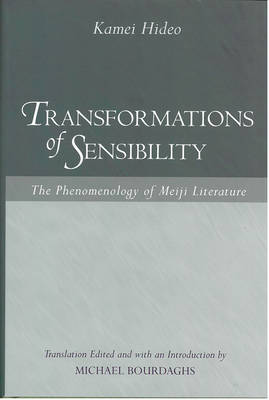
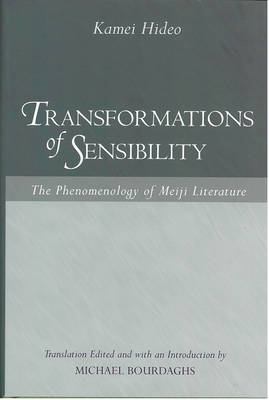
First published in Japan in 1983, this book is now a classic in modern Japanese literary studies. Covering an astonishing range of texts from the Meiji period (1868-1912), it presents sophisticated analyses of the ways that experiments in literary language produced multiple new--and sometimes revolutionary--forms of sensibility and subjectivity. Along the way, Kamei Hideo carries on an extended debate with Western theorists such as Saussure, Bakhtin, and Lotman, as well as with such contemporary Japanese critics as Karatani Kōjin and Noguchi Takehiko. Transformations of Sensibility deliberately challenges conventional wisdom about the rise of modern literature in Japan and offers highly original close readings of works by such writers as Futabatei Shimei, Tsubouchi Shōyō, Higuchi Ichiyō, and Izumi Kyōka, as well as writers previously ignored by most scholars. It also provides a new critical theorization of the relationship between language and sensibility, one that links the specificity of Meiji literature to broader concerns that transcend the field of Japanese literary studies. Available in English translation for the first time, it includes a new preface by the author and an introduction by the translation editor that explain the theoretical and historical contexts in which the work first appeared.
Specificaties
Betrokkenen
- Auteur(s):
- Uitgeverij:
Inhoud
- Aantal bladzijden:
- 374
- Taal:
- Engels
- Reeks:
Eigenschappen
- Productcode (EAN):
- 9780472038046
- Verschijningsdatum:
- 19/01/2021
- Uitvoering:
- Paperback
- Formaat:
- Trade paperback (VS)
- Afmetingen:
- 152 mm x 229 mm
- Gewicht:
- 548 g


Alleen bij Standaard Boekhandel
+ 67 punten op je klantenkaart van Standaard Boekhandel
Cadeau

AANGERADEN


Beoordelingen
We publiceren alleen reviews die voldoen aan de voorwaarden voor reviews. Bekijk onze voorwaarden voor reviews.