


- Afhalen na 1 uur in een winkel met voorraad
- Gratis thuislevering in België vanaf € 30
- Ruim aanbod met 7 miljoen producten
- Afhalen na 1 uur in een winkel met voorraad
- Gratis thuislevering in België vanaf € 30
- Ruim aanbod met 7 miljoen producten





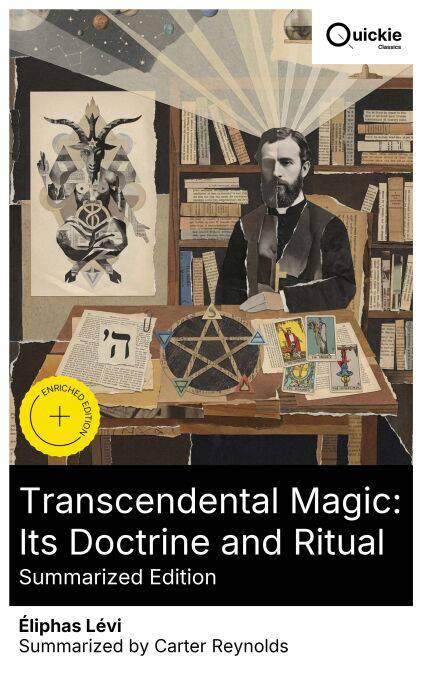
Transcendental Magic: Its Doctrine and Ritual (Summarized Edition) E-BOOK
Enriched edition. Reconciling Faith, Reason, and Wonder through Kabbalah, Hermetic Alchemy, Tarot, and Astral Light
Éliphas Lévi
E-book | Engels
€ 0,49
Omschrijving
Transcendental Magic: Its Doctrine and Ritual systematizes nineteenth‑century occultism. Split into 'Doctrine' and 'Ritual,' Lévi fuses Christian mysticism, Jewish Kabbalah, Hermetic alchemy, and the Tarot to propose a moral theurgy governed by 'astral light.' In lapidary aphorisms and scholastic cadences, he elevates symbols—the pentagram, Tetragrammaton, and Baphomet—into pedagogical engines, mapping correspondences between mind, matter, and rite. Composed amid the French occult revival, it recasts Renaissance magic for a post‑Revolutionary readership. Éliphas Lévi (Alphonse Louis Constant), a former seminarian and socialist pamphleteer, wrote after political disillusion and religious yearning reshaped his vocation. Schooled in Catholic theology and conversant with magnetism, he sought a synthesis reconciling faith, reason, and wonder. His iconic Sabbatic Goat and moralized pentagram appear here alongside critiques of table‑turning Spiritism, revealing a thinker intent on disciplining enchantment with ethics and erudition. For historians of ideas, students of Western esotericism, and reflective practitioners, this classic rewards patient, symbolic reading over literalism. Treat it as a grammar of images and an ethics of will—a demanding yet generative guide to the metaphysical imagination of modern Europe.
Quickie Classics summarizes timeless works with precision, preserving the author's voice and keeping the prose clear, fast, and readable—distilled, never diluted. Enriched Edition extras: Introduction · Synopsis · Historical Context · Brief Analysis · 4 Reflection Q&As · Editorial Footnotes.
Quickie Classics summarizes timeless works with precision, preserving the author's voice and keeping the prose clear, fast, and readable—distilled, never diluted. Enriched Edition extras: Introduction · Synopsis · Historical Context · Brief Analysis · 4 Reflection Q&As · Editorial Footnotes.
Specificaties
Betrokkenen
- Auteur(s):
- Vertaler(s):
- Uitgeverij:
Inhoud
- Aantal bladzijden:
- 131
- Taal:
- Engels
Eigenschappen
- Productcode (EAN):
- 8596547878582
- Verschijningsdatum:
- 9/01/2026
- Uitvoering:
- E-book
- Beveiligd met:
- Digital watermarking
- Formaat:
- ePub


Alleen bij Standaard Boekhandel
Cadeau

AANGERADEN


Beoordelingen
We publiceren alleen reviews die voldoen aan de voorwaarden voor reviews. Bekijk onze voorwaarden voor reviews.