


- Afhalen na 1 uur in een winkel met voorraad
- Gratis thuislevering in België vanaf € 30
- Ruim aanbod met 7 miljoen producten
- Afhalen na 1 uur in een winkel met voorraad
- Gratis thuislevering in België vanaf € 30
- Ruim aanbod met 7 miljoen producten





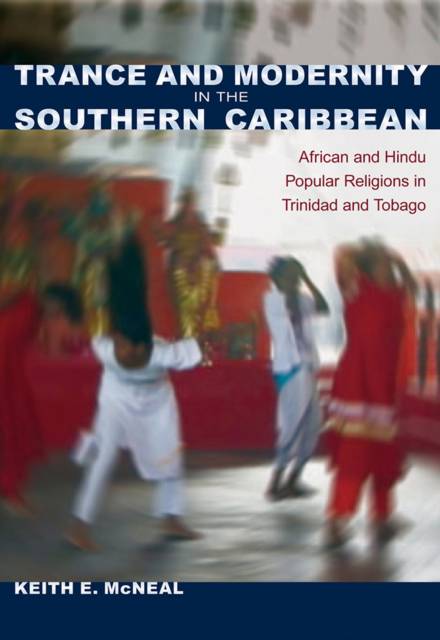
Trance and Modernity in the Southern Caribbean
African and Hindu Popular Religions in Trinidad and Tobago
Keith E McNeal
€ 114,45
+ 228 punten
Uitvoering
Eenvoudig bestellen
Veilig betalen


Gratis thuislevering vanaf € 30 (via bpost)
Gratis levering in je Standaard Boekhandel
Omschrijving
"Provides us with a masterful account of how socially marginalized segments of the African and Indian communities of Trinidad and Tobago developed trance-based religious cults linked with differing cultural heritages. Penetrating deeply into these two different communities with his careful fieldwork, he then places them within a brilliant account of the overall cultural history of this island nation."--Paul Younger, author of New Homelands: Hindu Communities in Mauritius, Guyana, Trinidad, South Africa, Fiji, and East Africa This comparative study of African and Hindu popular religions in the Republic of Trinidad and Tobago charts the development of religion in the Caribbean by analyzing the ways ecstatic forms of worship, enacted through trance performance and spirit mediumship, have adapted to capitalism and reconfigured themselves within the context of modernity. Showing how diasporic traditions of West African Orisha Worship and South Asian Shakti Puja converged in their ritual adaptations to colonialism in the West Indies, as well as diverged politically within the context of postcolonial multiculturalism, Keith McNeal reveals the unexpected ways these traditions of trance performance have become both globalized and modernized. The first book-length work to compare and contrast Afro- and Indo-Caribbean materials in a systematic and multidimensional manner, this volume makes fresh and innovative contributions to anthropology, religious studies, and the historiography of modernity. By giving both religious subcultures and their intersections equal attention, McNeal offers a richly textured account of southern Caribbean cultural history and pursues important questions about the history and future of religion. Keith E. McNeal is a Fulbright scholar with the Institute for Gender and Development Studies at the University of the West Indies in Trinidad and Tobago. His work has been published in a number of venues, including Activating the Past: Historical Memory in the Black Atlantic, Encountering Kali: In the Margins, at the Center, in the West, and the Encyclopedia of Caribbean Religions.
Specificaties
Betrokkenen
- Auteur(s):
- Uitgeverij:
Inhoud
- Aantal bladzijden:
- 408
- Taal:
- Engels
- Reeks:
Eigenschappen
- Productcode (EAN):
- 9780813037363
- Verschijningsdatum:
- 18/12/2011
- Uitvoering:
- Hardcover
- Formaat:
- Genaaid
- Afmetingen:
- 160 mm x 236 mm
- Gewicht:
- 657 g


Alleen bij Standaard Boekhandel
+ 228 punten op je klantenkaart van Standaard Boekhandel
CADEAU

AANGERADEN


Beoordelingen
We publiceren alleen reviews die voldoen aan de voorwaarden voor reviews. Bekijk onze voorwaarden voor reviews.