


- Afhalen na 1 uur in een winkel met voorraad
- Gratis thuislevering in België vanaf € 30
- Ruim aanbod met 7 miljoen producten
- Afhalen na 1 uur in een winkel met voorraad
- Gratis thuislevering in België vanaf € 30
- Ruim aanbod met 7 miljoen producten





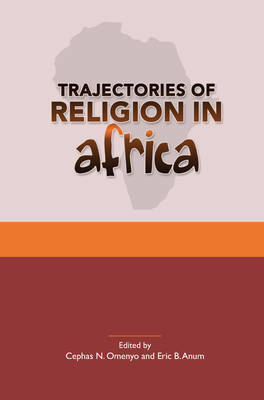
Trajectories of Religion in Africa
Essays in Honour of John S. Pobee
€ 175,95
+ 175 punten
Omschrijving
The book, in the main, discusses issues relating to mission, ecumenism, and theological education and is presented in four sections. The first segment discusses works on ecumenical and theological education and assesses the relevance of the World Council of Churches. Other issues discussed in this segment relate to the interrelationships that exist between academic theology, ecumenism, and Christianity. The World Missionary Conference held in Edinburgh in 1910, which set the agenda for world-wide mission in a promising manner in the 1920s, is also assessed in this section of the work.
The second segment, which covers Religion and Public Space, discusses works that examine the relationships between religion and power, religion and development, religion and traditional religious beliefs, and religion and practices in Africa. The third segment of the book treats Religion and Cultural Practices in African and how all these work out in couching out an African theology and African Christianity. Some of the issues discussed in this section related to African traditional philosophy, spiritism, and the interrelationships that exist between African Christianity and African Traditional Religion.
The last segment of the book discusses the issue of African biblical hermeneutics and specifically looks at contemporary hermeneutical approaches to biblical interpretations in Africa.
The second segment, which covers Religion and Public Space, discusses works that examine the relationships between religion and power, religion and development, religion and traditional religious beliefs, and religion and practices in Africa. The third segment of the book treats Religion and Cultural Practices in African and how all these work out in couching out an African theology and African Christianity. Some of the issues discussed in this section related to African traditional philosophy, spiritism, and the interrelationships that exist between African Christianity and African Traditional Religion.
The last segment of the book discusses the issue of African biblical hermeneutics and specifically looks at contemporary hermeneutical approaches to biblical interpretations in Africa.
Specificaties
Betrokkenen
- Uitgeverij:
Inhoud
- Aantal bladzijden:
- 416
- Taal:
- Engels
- Reeks:
- Reeksnummer:
- nr. 48
Eigenschappen
- Productcode (EAN):
- 9789042038103
- Verschijningsdatum:
- 1/01/2014
- Uitvoering:
- Paperback
- Formaat:
- Trade paperback (VS)
- Afmetingen:
- 152 mm x 229 mm
- Gewicht:
- 553 g


Alleen bij Standaard Boekhandel
+ 175 punten op je klantenkaart van Standaard Boekhandel
CADEAU


Beoordelingen
We publiceren alleen reviews die voldoen aan de voorwaarden voor reviews. Bekijk onze voorwaarden voor reviews.