


- Afhalen na 1 uur in een winkel met voorraad
- Gratis thuislevering in België vanaf € 30
- Ruim aanbod met 7 miljoen producten
- Afhalen na 1 uur in een winkel met voorraad
- Gratis thuislevering in België vanaf € 30
- Ruim aanbod met 7 miljoen producten





€ 191,95
+ 383 punten
Omschrijving
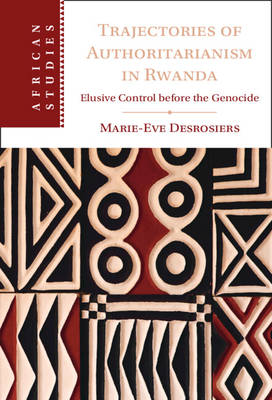
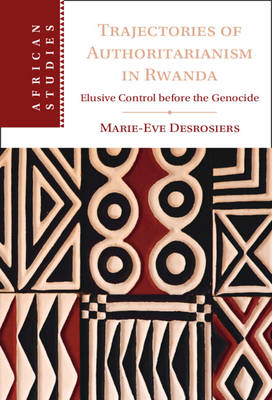
Challenging assumptions regarding the strength and control of authoritarian governments in Rwanda in the decades before the 1994 genocide, Marie-Eve Desrosiers uses original archival data and interviews to highlight the complex relations between authorities, opponents, and society. Through careful, detailed analysis Desrosiers offers a nuanced assessment of the functions and evolution of authoritarianism over time, demonstrating how the governments of Rwanda's first two post-independence Republics (1962-1990) sought and often struggled to cement their rule. Whilst the deeper, lived realities of authoritarianism are generally neglected by multi-cases comparisons at the heart of comparative authoritarian studies, this illuminating survey highlights the essential, yet subtle authoritarian strategies, patterns, and forms of decay that are too often overlooked when addressing authoritarian contexts.
Specificaties
Betrokkenen
- Auteur(s):
- Uitgeverij:
Inhoud
- Aantal bladzijden:
- 408
- Taal:
- Engels
- Reeks:
- Reeksnummer:
- nr. 161
Eigenschappen
- Productcode (EAN):
- 9781009224789
- Verschijningsdatum:
- 19/01/2023
- Uitvoering:
- Hardcover
- Formaat:
- Genaaid
- Afmetingen:
- 152 mm x 229 mm
- Gewicht:
- 712 g


Alleen bij Standaard Boekhandel
+ 383 punten op je klantenkaart van Standaard Boekhandel
Cadeau

AANGERADEN


Beoordelingen
We publiceren alleen reviews die voldoen aan de voorwaarden voor reviews. Bekijk onze voorwaarden voor reviews.