


- Afhalen na 1 uur in een winkel met voorraad
- Gratis thuislevering in België vanaf € 30
- Ruim aanbod met 7 miljoen producten
- Afhalen na 1 uur in een winkel met voorraad
- Gratis thuislevering in België vanaf € 30
- Ruim aanbod met 7 miljoen producten





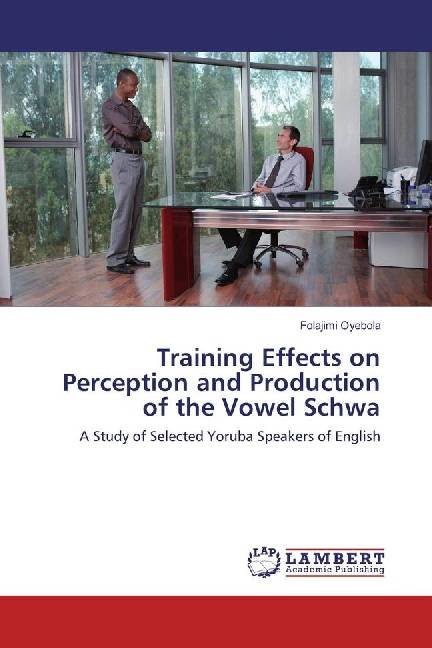
Training Effects on Perception and Production of the Vowel Schwa
A Study of Selected Yoruba Speakers of English
Folajimi Oyebola
Paperback | Engels
€ 49,45
+ 98 punten
Omschrijving
The acquisition of English language phonology has been found to be one of the most challenging skills to obtain by non-native English learners. Most L2 speakers are expected to have a foreign accent, especially if they do not begin learning the target language before the cut- off age. This accounts for the rationality behind the thought that L2 learners are prevented from acquiring and producing new sounds with a native-like competence. However, it has also been suggested that it is possible for learners, as they become more conversant with the target language, to improve in their production abilities. This work assessed the performances of some selected Yoruba speakers of English when perceiving and producing the English vowel Schwa. The L2 speakers were influenced by the orthography of the words; therefore they perceived and produced the English 'Schwas' as instances of their native vowels. The study consequently investigated the effects of pronunciation training on their perceptions and productions.
Specificaties
Betrokkenen
- Auteur(s):
- Uitgeverij:
Inhoud
- Aantal bladzijden:
- 92
- Taal:
- Engels
Eigenschappen
- Productcode (EAN):
- 9783659922428
- Uitvoering:
- Paperback
- Afmetingen:
- 150 mm x 220 mm
- Gewicht:
- 156 g


Alleen bij Standaard Boekhandel
+ 98 punten op je klantenkaart van Standaard Boekhandel
AANGERADEN


Beoordelingen
We publiceren alleen reviews die voldoen aan de voorwaarden voor reviews. Bekijk onze voorwaarden voor reviews.