


- Afhalen na 1 uur in een winkel met voorraad
- Gratis thuislevering in België vanaf € 30
- Ruim aanbod met 7 miljoen producten
- Afhalen na 1 uur in een winkel met voorraad
- Gratis thuislevering in België vanaf € 30
- Ruim aanbod met 7 miljoen producten





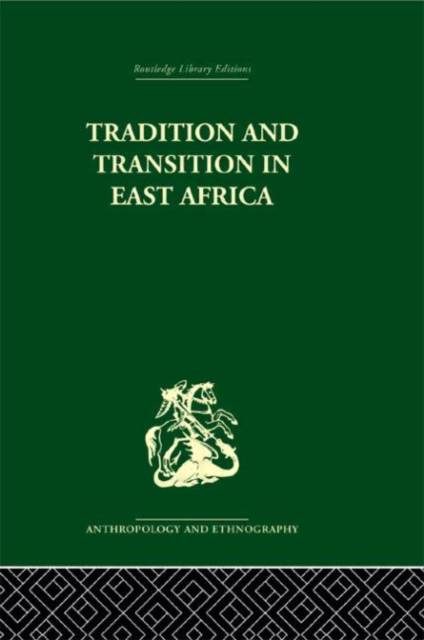
Tradition and Transition in East Africa
Studies of the Tribal Factor in the Modern Era
€ 465,95
+ 931 punten
Omschrijving
First published in 1969. Divided into two parts, the first sections in the book examine the significance of the tribal factor in certain general contexts and discuss some of the particular backgrounds to contemporary transition in East Africa. There are essays on politics, economic development, language, law and education, together with a comparative look at European nationalism. In the second part, the grass-roots basis and development of the concept of the tribe are considered and its operation in social life in rural areas discussed. The contributions come from a wide range of scholars in the social sciences, history and law and the contributors are: W.J. Argyle, George Bennett, Tom J. Mboya, W.H. Whiteley, Eugene Cotran, J.W. Tyler, J.S. La Fontaine, Michael Twaddle, Kathleen M. Stahl, P.H. Gulliver, Kirsten Alneas, David J. Parkin, R.D. Grillo, I.M. Lewis, H.F. Morris.
Specificaties
Betrokkenen
- Uitgeverij:
Inhoud
- Aantal bladzijden:
- 386
- Taal:
- Engels
- Reeks:
Eigenschappen
- Productcode (EAN):
- 9780415329866
- Verschijningsdatum:
- 26/02/2004
- Uitvoering:
- Hardcover
- Formaat:
- Genaaid
- Afmetingen:
- 145 mm x 223 mm
- Gewicht:
- 607 g

Alleen bij Standaard Boekhandel
+ 931 punten op je klantenkaart van Standaard Boekhandel
Cadeau

AANGERADEN


Beoordelingen
We publiceren alleen reviews die voldoen aan de voorwaarden voor reviews. Bekijk onze voorwaarden voor reviews.