


- Afhalen na 1 uur in een winkel met voorraad
- Gratis thuislevering in België vanaf € 30
- Ruim aanbod met 7 miljoen producten
- Afhalen na 1 uur in een winkel met voorraad
- Gratis thuislevering in België vanaf € 30
- Ruim aanbod met 7 miljoen producten





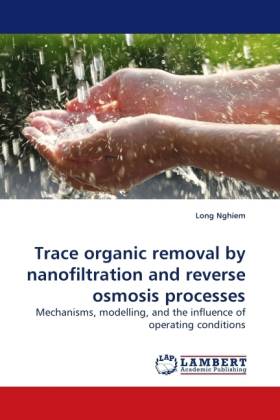
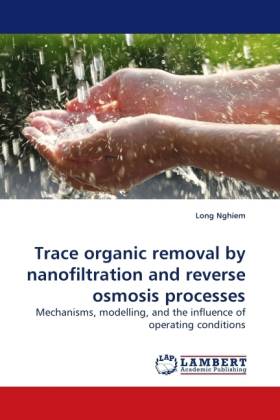
Trace organic removal by nanofiltration and reverse osmosis processes
Mechanisms, modelling, and the influence of operating conditions
Long Nghiem
Paperback | Engels
€ 77,95
+ 155 punten
Omschrijving
This monograph delineates the retention mechanisms of emerging trace organic contaminants by several nanofiltration (NF) and reverse osmosis membranes. Retention of neutral trace organics by a tight NF or RO membrane is dominated by steric (size) exclusion, whereas both electrostatic repulsion and steric exclusion govern the retention of negatively charged trace organics by a loose NF membrane. Speciation of trace organics may lead to a dramatic change in retention as a function of pH, with much greater retention observed for ionized, negatively charged trace organics. Retention of the negatively charged trace organics decreases as the solution s ionic strength increases due to charge shielding and double layer compression. For uncharged trace organic species, intrinsic physicochemical properties of the trace organic molecules can substantially affect their retention. This monograph also critically demonstrates the possible complexity of a real membrane filtration system where trace organic contaminants are of concern. Factors such as operating conditions and feed solution composition can influence the filtration of trace organics.
Specificaties
Betrokkenen
- Auteur(s):
- Uitgeverij:
Inhoud
- Aantal bladzijden:
- 228
- Taal:
- Engels
Eigenschappen
- Productcode (EAN):
- 9783838322100
- Verschijningsdatum:
- 9/06/2010
- Uitvoering:
- Paperback
- Afmetingen:
- 152 mm x 229 mm
- Gewicht:
- 340 g


Alleen bij Standaard Boekhandel
+ 155 punten op je klantenkaart van Standaard Boekhandel
Cadeau

AANGERADEN


Beoordelingen
We publiceren alleen reviews die voldoen aan de voorwaarden voor reviews. Bekijk onze voorwaarden voor reviews.