


- Afhalen na 1 uur in een winkel met voorraad
- Gratis thuislevering in België vanaf € 30
- Ruim aanbod met 7 miljoen producten
- Afhalen na 1 uur in een winkel met voorraad
- Gratis thuislevering in België vanaf € 30
- Ruim aanbod met 7 miljoen producten





€ 60,78
+ 121 punten
Omschrijving
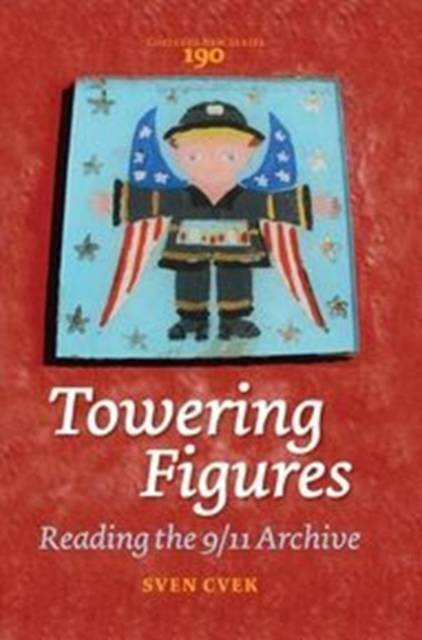
This volume offers a critical analysis of a segment of American literary production surrounding the September 11, 2001 attacks on the United States. While focusing on the writing of Jonathan Safran Foer, Art Spiegelman, Don DeLillo, and Thomas Pynchon, the author locates this work within a larger 9/11 cultural archive. The book proceeds by way of a series of thematic leaps in order to unearth the active entanglement of the event with systems of meaning and power that create the conditions for its emergence and understanding. The main problem of such an approach consists in articulating the three-fold relation at the heart of the archive in which issues of traumatic loss, affect, and politics appear as central: between the historical event, its cultural imprint, and the wider social system. In order to grasp these fundamental relations, the author resorts to a layered interpretive framework and engages a number of theoretical protocols, from psychoanalysis and nationalism studies to philosophy of history, world-system theory, and the heterogeneous critical practices of American Studies. Coming from a non-US Americanist perspective, this contribution to the scholarly production about 9/11 concentrates on trauma as a problem in the conceptualization the event, insists on globalization as its crucial context, and argues for a historical materialist approach to the 9/11 archive.
Specificaties
Betrokkenen
- Auteur(s):
- Uitgeverij:
Inhoud
- Aantal bladzijden:
- 272
- Taal:
- Engels
- Reeks:
- Reeksnummer:
- nr. 190
Eigenschappen
- Productcode (EAN):
- 9789042033788
- Verschijningsdatum:
- 1/01/2011
- Uitvoering:
- Paperback
- Formaat:
- Trade paperback (VS)
- Afmetingen:
- 155 mm x 234 mm
- Gewicht:
- 385 g


Alleen bij Standaard Boekhandel
+ 121 punten op je klantenkaart van Standaard Boekhandel
Cadeau

AANGERADEN


Beoordelingen
We publiceren alleen reviews die voldoen aan de voorwaarden voor reviews. Bekijk onze voorwaarden voor reviews.