


- Afhalen na 1 uur in een winkel met voorraad
- Gratis thuislevering in België vanaf € 30
- Ruim aanbod met 7 miljoen producten
- Afhalen na 1 uur in een winkel met voorraad
- Gratis thuislevering in België vanaf € 30
- Ruim aanbod met 7 miljoen producten





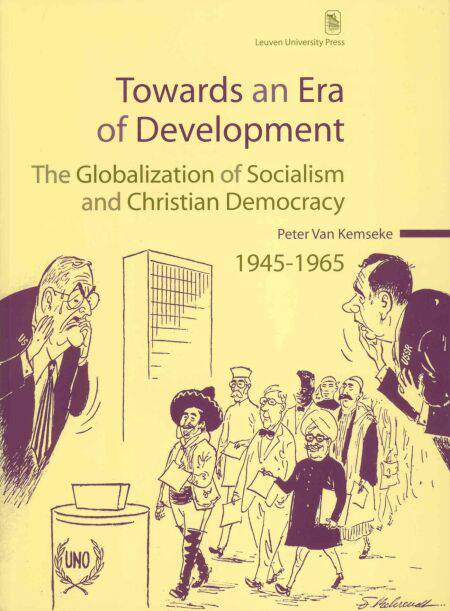
Towards an era of development E-BOOK
the globalization of socialism and Christian democracy, 1945-1965
Peter van Kemseke
€ 25,00
+ 25 punten
Uitvoering
Omschrijving
A world of difference separates global politics in 1945 from 1965. In the twenty years after the second world war, a 'Third World' was added to the Cold War concepts of the 'First' and 'Second' worlds, and post-war decolonization had ushered in an 'era of development'. For the first time ever, theories and policies to eradicate underdevelopment became prominent on the global agenda and advanced to the top priority on the United Nations' agenda.
This international evolution inevitably had a dramatic impact on Socialism and Christian Democracy, two major ideologies which had their roots in Western Europe. Both became part of the global political dialogues taking place beyond Europe's borders. The result was a fascinating clash of Western and non-Western belief systems. But was it only that? Or were these political ideologies being used as vehicles for promoting national interests? Was the expansion of both ideologies beyond Europe driven, or even manipulated by realpolitical considerations or can ideologies truly wield autonomous international momentum capable of influencing global politics on their own? And how successful were these ideologies in expanding beyond their European home base? These are questions that seem more relevant to explore today than ever before.
This international evolution inevitably had a dramatic impact on Socialism and Christian Democracy, two major ideologies which had their roots in Western Europe. Both became part of the global political dialogues taking place beyond Europe's borders. The result was a fascinating clash of Western and non-Western belief systems. But was it only that? Or were these political ideologies being used as vehicles for promoting national interests? Was the expansion of both ideologies beyond Europe driven, or even manipulated by realpolitical considerations or can ideologies truly wield autonomous international momentum capable of influencing global politics on their own? And how successful were these ideologies in expanding beyond their European home base? These are questions that seem more relevant to explore today than ever before.
Specificaties
Betrokkenen
- Auteur(s):
- Uitgeverij:
Inhoud
- Aantal bladzijden:
- 324
- Taal:
- Engels
- Reeks:
Eigenschappen
- Productcode (EAN):
- 9789461661098
- Verschijningsdatum:
- 17/04/2017
- Uitvoering:
- E-book
- Beveiligd met:
- Digital watermarking
- Formaat:


Alleen bij Standaard Boekhandel
+ 25 punten op je klantenkaart van Standaard Boekhandel
Cadeau

AANGERADEN


Beoordelingen
We publiceren alleen reviews die voldoen aan de voorwaarden voor reviews. Bekijk onze voorwaarden voor reviews.