


- Afhalen na 1 uur in een winkel met voorraad
- Gratis thuislevering in België vanaf € 30
- Ruim aanbod met 7 miljoen producten
- Afhalen na 1 uur in een winkel met voorraad
- Gratis thuislevering in België vanaf € 30
- Ruim aanbod met 7 miljoen producten





€ 72,95
+ 145 punten
Omschrijving
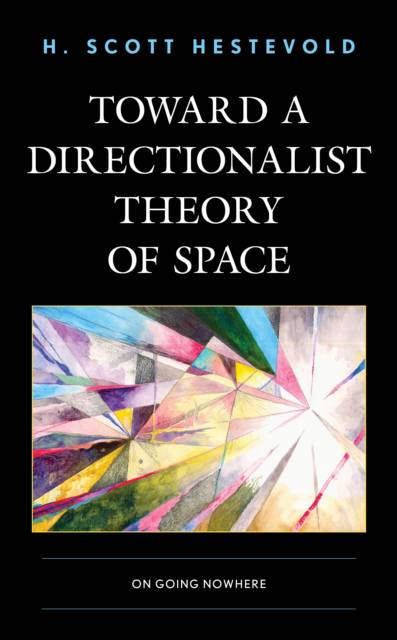
In Toward a Directionalist Theory of Space: On Going Nowhere, H. Scott Hestevold formulates a new relationalist theory of space by appealing to the view that the universe is directioned in the sense that there exist directional relations--a class of spatial relations that Leibniz overlooked. Extending the directionalist/relationalist theory of space to the problem of when it is that discrete objects compose a whole, Hestevold revisits his answer to the Special Composition Question. He also uses the directionalist/relationalist theory to formulate reductivist theories of boundaries and holes--theories that may allow one to resist the view that boundaries and holes are ontologically parasitic entities. Finally, he explores directionalism/relationalism vis-à-vis spacetime. After noting findings of modern physics that favor substantivalist spacetime and then developing metaphysical concerns that favor instead directionalist/relationalist spacetime, Hestevold notes the ontological benefit of endorsing spatiotemporal directional relations even if spacetime substantivalism is the winning theory.
Specificaties
Betrokkenen
- Auteur(s):
- Uitgeverij:
Inhoud
- Aantal bladzijden:
- 242
- Taal:
- Engels
- Reeks:
Eigenschappen
- Productcode (EAN):
- 9781498579988
- Verschijningsdatum:
- 17/05/2022
- Uitvoering:
- Paperback
- Formaat:
- Trade paperback (VS)
- Afmetingen:
- 152 mm x 229 mm
- Gewicht:
- 326 g


Alleen bij Standaard Boekhandel
+ 145 punten op je klantenkaart van Standaard Boekhandel
Cadeau

AANGERADEN


Beoordelingen
We publiceren alleen reviews die voldoen aan de voorwaarden voor reviews. Bekijk onze voorwaarden voor reviews.