


- Afhalen na 1 uur in een winkel met voorraad
- Gratis thuislevering in België vanaf € 30
- Ruim aanbod met 7 miljoen producten
- Afhalen na 1 uur in een winkel met voorraad
- Gratis thuislevering in België vanaf € 30
- Ruim aanbod met 7 miljoen producten





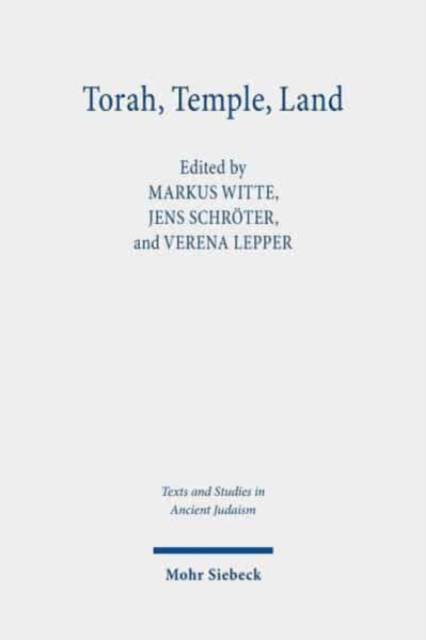
Torah, Temple, Land
Constructions of Judaism in Antiquity
€ 146,95
+ 293 punten
Omschrijving
The present volume contains the proceedings of a conference held in October 2018 at Humboldt University Berlin. The articles reflect the different categories of describing Judaism of the Second Temple Period in view of their sustainability in characterising an ancient religious community in different historical situations and discuss relevant (re)constructions of ancient Judaism in the history of scholarship. Since the Persian period, ancient Judaism existed in a world which was in constant flux regarding its political, social, and religious contexts. Consequently, Judaism was subject to permanent processes of change in its self-perception as well as its external perception. In all complexity, however, the Torah, the Temple(s) as a place where heaven meets the earth, and the 'holy' or 'promised' land as the dwelling place of God's people can be regarded as institutions to which all kinds of Judaism in the Babylonian and Egyptian dispora as well in Israel/Palestine were related in some way or another.
Specificaties
Betrokkenen
- Uitgeverij:
Inhoud
- Aantal bladzijden:
- 323
- Taal:
- Engels
- Reeks:
Eigenschappen
- Productcode (EAN):
- 9783161598531
- Verschijningsdatum:
- 1/05/2021
- Uitvoering:
- Hardcover
- Formaat:
- Genaaid
- Afmetingen:
- 231 mm x 155 mm
- Gewicht:
- 435 g

Alleen bij Standaard Boekhandel
+ 293 punten op je klantenkaart van Standaard Boekhandel
AANGERADEN


Beoordelingen
We publiceren alleen reviews die voldoen aan de voorwaarden voor reviews. Bekijk onze voorwaarden voor reviews.