


- Afhalen na 1 uur in een winkel met voorraad
- Gratis thuislevering in België vanaf € 30
- Ruim aanbod met 7 miljoen producten
- Afhalen na 1 uur in een winkel met voorraad
- Gratis thuislevering in België vanaf € 30
- Ruim aanbod met 7 miljoen producten





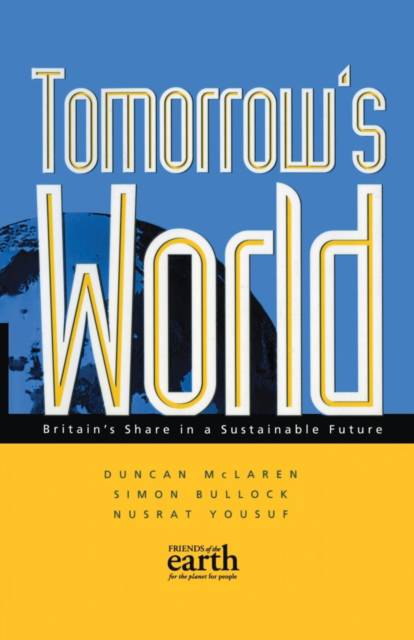
Tomorrow's World
Britain's share in a sustainable future
Duncan McLaren, Simon Bullock, Nusrat Yousuf
Paperback | Engels
€ 122,45
+ 244 punten
Uitvoering
Omschrijving
20 per cent of the Earth's population currently consumes over 80 per cent of available resources. Whilst most Westerners lead lives of unprecedented material comfort fuelled by spiralling consumption patterns, 1.3 billion people exist on less than US$1 per day. As the first industrial nation and a former colonial power, Britain's record of overconsumption is one of the most notable. Researched and written by Friends of the Earth, Tomorrow's World argues that Britain must make deep cuts in resource consumption in order to allow developing countries to escape from poverty, and to prevent further� breaches of environmental limits. It sets targets for reduced consumption levels, and shows how these can be met. In doing so, it demonstrates that significant goals in our society - health, employment, equality and a secure environment - are not determined by consumption, and that lower consumption levels can improve our quality of life. Originally published in 1997
Specificaties
Betrokkenen
- Auteur(s):
- Uitgeverij:
Inhoud
- Aantal bladzijden:
- 398
- Taal:
- Engels
Eigenschappen
- Productcode (EAN):
- 9781853835117
- Verschijningsdatum:
- 1/10/1997
- Uitvoering:
- Paperback
- Formaat:
- Trade paperback (VS)
- Afmetingen:
- 135 mm x 201 mm
- Gewicht:
- 517 g


Alleen bij Standaard Boekhandel
+ 244 punten op je klantenkaart van Standaard Boekhandel
Cadeau

AANGERADEN


Beoordelingen
We publiceren alleen reviews die voldoen aan de voorwaarden voor reviews. Bekijk onze voorwaarden voor reviews.