


- Afhalen na 1 uur in een winkel met voorraad
- Gratis thuislevering in België vanaf € 30
- Ruim aanbod met 7 miljoen producten
- Afhalen na 1 uur in een winkel met voorraad
- Gratis thuislevering in België vanaf € 30
- Ruim aanbod met 7 miljoen producten





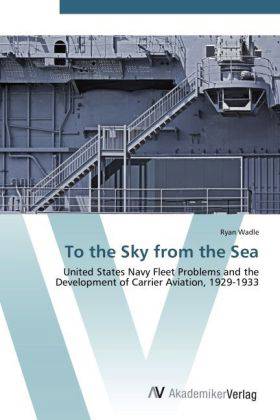
To the Sky from the Sea
United States Navy Fleet Problems and the Development of Carrier Aviation, 1929-1933
Ryan Wadle
Paperback | Engels
€ 64,67
+ 129 punten
Omschrijving
Revision with unchanged content. During World War II, carrier fleets were the centerpiece of the American naval armada that ultimately crushed the Japanese Empire in the Pacific Theater. But when did aircraft carriers come to be used independently and offensively by the U.S. Navy? This study examines the maturation of American carrier-borne airpower during the interwar period. From 1929 to 1933, the U.S. Navy extensively tested the capabilities of carrier air power in major fleet exercises using their new, large carriers, Lexington and Saratoga. The Navy's assess-ment of the exercises during this critical five-year period helped determine the course of carrier aviation for the remainder of the interwar period. How were the results of these exercises relayed to Congress and in order to secure fur-ther funding appropriations? How did the press cover these exercises? This book is intended for those interested in military history, naval or maritime history, and the history of technology.
Specificaties
Betrokkenen
- Auteur(s):
- Uitgeverij:
Inhoud
- Aantal bladzijden:
- 132
- Taal:
- Engels
Eigenschappen
- Productcode (EAN):
- 9783639449457
- Verschijningsdatum:
- 1/08/2012
- Uitvoering:
- Paperback
- Formaat:
- Trade paperback (VS)
- Afmetingen:
- 152 mm x 229 mm
- Gewicht:
- 204 g


Alleen bij Standaard Boekhandel
+ 129 punten op je klantenkaart van Standaard Boekhandel
CADEAU


Beoordelingen
We publiceren alleen reviews die voldoen aan de voorwaarden voor reviews. Bekijk onze voorwaarden voor reviews.