


- Afhalen na 1 uur in een winkel met voorraad
- Gratis thuislevering in België vanaf € 30
- Ruim aanbod met 7 miljoen producten
- Afhalen na 1 uur in een winkel met voorraad
- Gratis thuislevering in België vanaf € 30
- Ruim aanbod met 7 miljoen producten





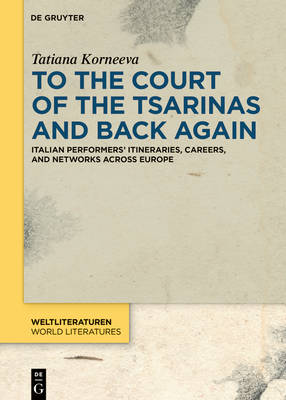
To the Court of the Tsarinas and Back Again
Italian Performers' Itineraries, Careers, and Networks Across Europe
Tatiana Korneeva
€ 159,45
+ 318 punten
Omschrijving
In the 18th century Italian theatre and its artists became vital to Russian rulers, who employed Italian musico-dramatic works to advance their political agendas and emphasize Russia's cultural uniqueness and its cosmopolitan character. Innumerable playwrights and composers, actors and singers were active at the Russian court. Usually considered at best peripheral to Europe, the faraway Russian Empire represents a particularly powerful example of the mobility of theatre agents and the circulation of artistic practices. This book sets a new regional accent on imperial Russia, thus mitigating the traditional historiographical emphasis on Western Europe, and adopts a transnational approach to theatre and music history. Its aim is twofold. First, to explore Italian music-theatrical repertoires that occupied a crucial position within the spectacle of absolutism in Russia. Second, to investigate careers and travel routes of the Italian theatre professionals. The examination of their activities at the Russian court aims not only to provide a fuller understanding of their vital role in the transmission of socio-political and artistic ideas, but also to more firmly situate Russia in the broader arena of European cultural production.
Specificaties
Betrokkenen
- Auteur(s):
- Uitgeverij:
Inhoud
- Aantal bladzijden:
- 198
- Taal:
- Engels
- Reeks:
- Reeksnummer:
- nr. 23
Eigenschappen
- Productcode (EAN):
- 9783110751048
- Verschijningsdatum:
- 21/08/2023
- Uitvoering:
- Hardcover
- Formaat:
- Genaaid
- Afmetingen:
- 170 mm x 244 mm
- Gewicht:
- 521 g


Alleen bij Standaard Boekhandel
+ 318 punten op je klantenkaart van Standaard Boekhandel
CADEAU


Beoordelingen
We publiceren alleen reviews die voldoen aan de voorwaarden voor reviews. Bekijk onze voorwaarden voor reviews.