


- Afhalen na 1 uur in een winkel met voorraad
- Gratis thuislevering in België vanaf € 30
- Ruim aanbod met 7 miljoen producten
- Afhalen na 1 uur in een winkel met voorraad
- Gratis thuislevering in België vanaf € 30
- Ruim aanbod met 7 miljoen producten





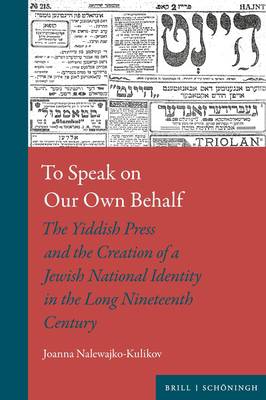
To Speak on Our Own Behalf
The Yiddish Press and the Creation of a Jewish National Identity in the Long Nineteenth Century
Joanna Nalewajko-Kulikov
€ 49,45
+ 98 punten
Omschrijving
Early 20th-century Warsaw witnessed an unprecedented development of the Yiddish press. This led to a backlash not only between Poles and Jews but also among Jews themselves, over whether Jews constituted a political nation. The book analyzes how mass-circulation newspapers were not just information channels, but active platforms established by Litvak Jews in the aftermath of the 1905 Revolution for debating and defining Jewishness. Events such as the 1912 elections to the Duma and the Beilis trial proved that this press was an important factor in shaping modern Jewish national identity, as it created a public sphere that crucially allowed ordinary Jews to "speak in their own name." For this very reason, it caused anxiety and moral panic in Polish public opinion, thereby turning the Litvaks into a principal enemy of the Polish nation.
Specificaties
Betrokkenen
- Auteur(s):
- Uitgeverij:
Inhoud
- Aantal bladzijden:
- 300
- Taal:
- Engels
- Reeks:
- Reeksnummer:
- nr. 2
Eigenschappen
- Productcode (EAN):
- 9783506705389
- Verschijningsdatum:
- 3/08/2026
- Uitvoering:
- Hardcover
- Formaat:
- Genaaid
- Afmetingen:
- 155 mm x 235 mm


Alleen bij Standaard Boekhandel
+ 98 punten op je klantenkaart van Standaard Boekhandel
Cadeau

AANGERADEN


Beoordelingen
We publiceren alleen reviews die voldoen aan de voorwaarden voor reviews. Bekijk onze voorwaarden voor reviews.