



Je cadeautjes zeker op tijd in huis hebben voor de feestdagen? Kom langs in onze winkels en vind het perfecte geschenk!
- Afhalen na 1 uur in een winkel met voorraad
- Gratis thuislevering in België vanaf € 30
- Ruim aanbod met 7 miljoen producten
Je cadeautjes zeker op tijd in huis hebben voor de feestdagen? Kom langs in onze winkels en vind het perfecte geschenk!
- Afhalen na 1 uur in een winkel met voorraad
- Gratis thuislevering in België vanaf € 30
- Ruim aanbod met 7 miljoen producten





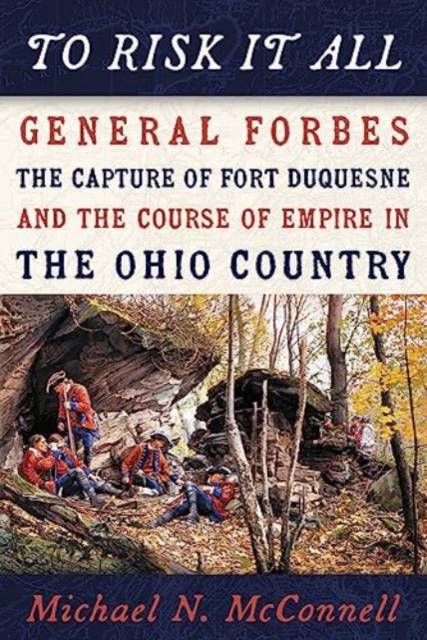
To Risk It All
General Forbes, the Capture of Fort Duquesne, and the Course of Empire in the Ohio Country
Michael McConnell
€ 41,95
+ 83 punten
Omschrijving
General John Forbes's campaign against Fort Duquesne was the largest overland expedition during the Seven Years' War in America. While most histories of the period include the Forbes Campaign as an aside, McConnell documents how and why Forbes and his army succeeded, and what his success meant to the subsequent history of the mid-Atlantic colonies, native inhabitants of the Ohio Country, and the empire he represented.
A close look at the Forbes Campaign and its personnel reveals much about both British relations with native peoples and the nature of Britain's American empire during a time of stress. Unlike other campaigns, this one consisted largely of colonial--not professional British--troops. In addition, individual colonies negotiated their role in the campaign and frequently placed their own local interests ahead of those of the empire as a whole. The campaign thus suggests the limits of imperial power and how Britain's hold over its American frontiers was, at best, tenuous and helped lead to an eventual breakdown of empire in the 1760s and 1770s.
A close look at the Forbes Campaign and its personnel reveals much about both British relations with native peoples and the nature of Britain's American empire during a time of stress. Unlike other campaigns, this one consisted largely of colonial--not professional British--troops. In addition, individual colonies negotiated their role in the campaign and frequently placed their own local interests ahead of those of the empire as a whole. The campaign thus suggests the limits of imperial power and how Britain's hold over its American frontiers was, at best, tenuous and helped lead to an eventual breakdown of empire in the 1760s and 1770s.
Specificaties
Betrokkenen
- Auteur(s):
- Uitgeverij:
Inhoud
- Aantal bladzijden:
- 400
- Taal:
- Engels
- Reeks:
Eigenschappen
- Productcode (EAN):
- 9780822967262
- Verschijningsdatum:
- 27/06/2023
- Uitvoering:
- Paperback
- Formaat:
- Trade paperback (VS)
- Afmetingen:
- 152 mm x 229 mm
- Gewicht:
- 585 g



Alleen bij Standaard Boekhandel
+ 83 punten op je klantenkaart van Standaard Boekhandel
CADEAU


Beoordelingen
We publiceren alleen reviews die voldoen aan de voorwaarden voor reviews. Bekijk onze voorwaarden voor reviews.