


- Afhalen na 1 uur in een winkel met voorraad
- Gratis thuislevering in België vanaf € 30
- Ruim aanbod met 7 miljoen producten
- Afhalen na 1 uur in een winkel met voorraad
- Gratis thuislevering in België vanaf € 30
- Ruim aanbod met 7 miljoen producten





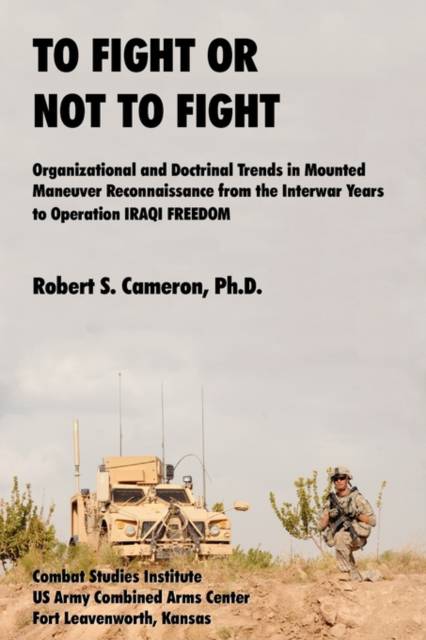
To Fight or Not to Fight?
Organizational and Doctrinal Trends in Mounted Maneuver Reconnaissance from the Interwar Years to Operation IRAQI FREEDOM
Robert S Cameron
Paperback | Engels
€ 60,95
+ 121 punten
Omschrijving
Provides a narrative analysis of US Army reconnaissance, scout, and cavalry evolution from the post-World War I era through the Iraqi conflict. It outlines key developments in the concepts governing reconnaissance units from the armored cavalry regiment down to the maneuver battalion scout platoon. These changes are placed in the context of national defense policy decisions and major Army initiatives. The title derives from the almost cyclic shifts between reconnaissance organizations oriented on information collection and those designed for a broader mission set. The text focuses on doctrinal and organizational changes, but training, materiel development, and the impact of combat operations constitute important supporting themes. This study also traces the transition from horse to vehicular reconnaissance, later bolstered by air cavalry and more recently with a variety of sensors and unmanned systems. Originally published by Combat Studies Institute in 2010, this book is profusely illustrated throughout.
Specificaties
Betrokkenen
- Auteur(s):
- Uitgeverij:
Inhoud
- Aantal bladzijden:
- 654
- Taal:
- Engels
Eigenschappen
- Productcode (EAN):
- 9781907521461
- Verschijningsdatum:
- 1/06/2010
- Uitvoering:
- Paperback
- Formaat:
- Trade paperback (VS)
- Afmetingen:
- 156 mm x 234 mm
- Gewicht:
- 902 g


Alleen bij Standaard Boekhandel
+ 121 punten op je klantenkaart van Standaard Boekhandel

Beoordelingen
We publiceren alleen reviews die voldoen aan de voorwaarden voor reviews. Bekijk onze voorwaarden voor reviews.