



Bedankt voor het vertrouwen het afgelopen jaar! Om jou te bedanken bieden we GRATIS verzending (in België) aan op alles gedurende de hele maand januari.
- Afhalen na 1 uur in een winkel met voorraad
- Gratis thuislevering in België vanaf € 30
- Ruim aanbod met 7 miljoen producten
Bedankt voor het vertrouwen het afgelopen jaar! Om jou te bedanken bieden we GRATIS verzending (in België) aan op alles gedurende de hele maand januari.
- Afhalen na 1 uur in een winkel met voorraad
- Gratis thuislevering in België vanaf € 30
- Ruim aanbod met 7 miljoen producten





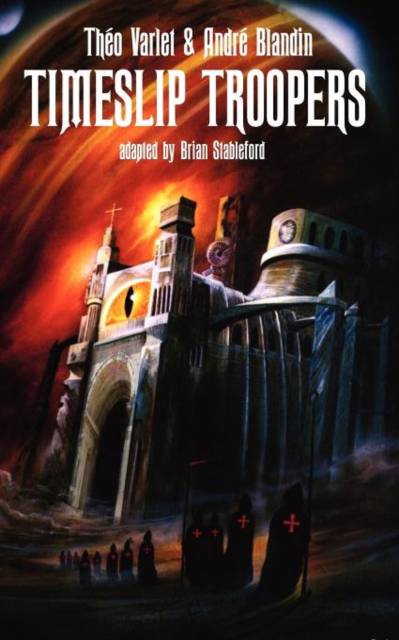
Omschrijving
In Timeslip Troopers (1923), a squadron of World War I soldiers from the Trenches is transported back to the Spanish town of Valencia in the 14th century where they ally themselves with the Moors to fight the Spanish Inquisition. While it is one of several French novels inspired by H. G. Wells' The Time Machine -- purporting, in fact, to be its sequel -- it has more in common with Mark Twain's A Connecticut Yankee in the Court of King Arthur, in that its timeslipped protagonists set out to use the advantages of modern civilization, but eventually cannot prevail against Dark Age obduracy. Written by the author of The Xenobiotic Invasion and The Martian Epic, Timeslip Troopers is one of the finest romans scientifiques of the period between World War I and the birth of American science fiction. It holds up remarkably well as an exploratory endeavor, and the quality of its cynical black humor is still as fresh as ever.
Specificaties
Betrokkenen
- Auteur(s):
- Uitgeverij:
Inhoud
- Aantal bladzijden:
- 256
- Taal:
- Engels
Eigenschappen
- Productcode (EAN):
- 9781612270784
- Verschijningsdatum:
- 27/02/2012
- Uitvoering:
- Paperback
- Formaat:
- Trade paperback (VS)
- Afmetingen:
- 127 mm x 203 mm
- Gewicht:
- 281 g


Alleen bij Standaard Boekhandel
+ 56 punten op je klantenkaart van Standaard Boekhandel
CADEAU


Beoordelingen
We publiceren alleen reviews die voldoen aan de voorwaarden voor reviews. Bekijk onze voorwaarden voor reviews.