


- Afhalen na 1 uur in een winkel met voorraad
- Gratis thuislevering in België vanaf € 30
- Ruim aanbod met 7 miljoen producten
- Afhalen na 1 uur in een winkel met voorraad
- Gratis thuislevering in België vanaf € 30
- Ruim aanbod met 7 miljoen producten





€ 244,45
+ 488 punten
Omschrijving
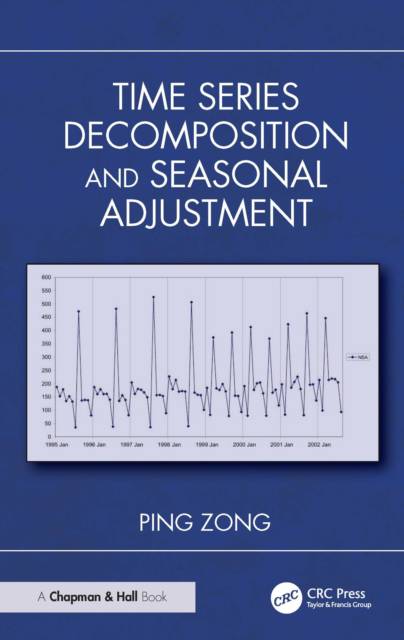
This book provides an in-depth examination of time series decomposition and seasonal adjustment, focusing on the X-13ARIMA-SEATS and TRAMO-SEATS methods. Seasonal adjustment removes distortions such as seasonal fluctuations and holiday effects from economic indicators (eg, GDP, CPI), enabling clearer insights into underlying trends, cycles, and shocks. These tools are vital for sound policymaking, accurate forecasting, and reliable international comparisons.
X-13ARIMA-SEATS, developed by the U.S. Census Bureau, combines empirical moving average filters with ARIMA/regARIMA modelling to handle outliers, calendar effects, and endpoint issues. TRAMO-SEATS, created by the Bank of Spain, uses a model-based strategy: TRAMO pre-adjusts data with ARIMA models, while SEATS applies signal extraction to decompose components. X-13ARIMA-SEATS excels with stable seasonal patterns, while TRAMO-SEATS provides rigorous solutions for complex holiday structures.
The book also examines modern challenges, including structural breaks from COVID-19, high-frequency data with multiple seasonalities, and the demand for real-time adjustments. It reviews innovations such as hybrid models that combine machine learning with traditional filters, Bayesian State Space approaches, and adaptive methods such as Kalman filters.
Intended for students, researchers, staff at national statistical agencies, central banks, and financial institutions, the book equips readers with methodological and practical tools to navigate evolving economic data landscapes.


Alleen bij Standaard Boekhandel
+ 488 punten op je klantenkaart van Standaard Boekhandel
Cadeau

AANGERADEN


Beoordelingen
We publiceren alleen reviews die voldoen aan de voorwaarden voor reviews. Bekijk onze voorwaarden voor reviews.