


- Afhalen na 1 uur in een winkel met voorraad
- Gratis thuislevering in België vanaf € 30
- Ruim aanbod met 7 miljoen producten
- Afhalen na 1 uur in een winkel met voorraad
- Gratis thuislevering in België vanaf € 30
- Ruim aanbod met 7 miljoen producten





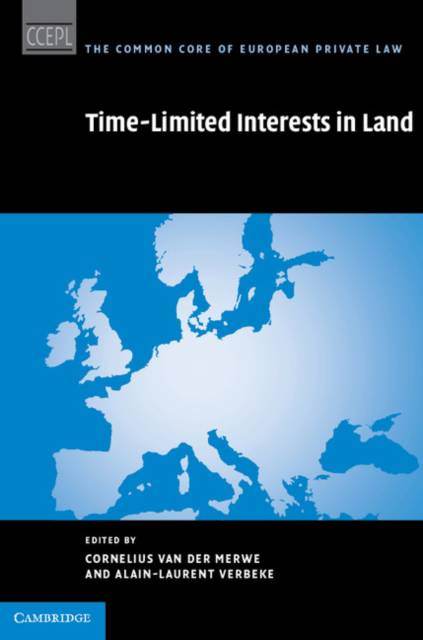
Time Limited Interests in Land
€ 104,45
+ 208 punten
Omschrijving
A comprehensive comparative treatment of six instances of time-limited interests in land as encountered in fourteen European jurisdictions. The survey explores the commercial or social origins of each legal institution concerned and highlights their enforceability against third parties, their content and their role in land development. The commercial purpose of residential and agricultural leases is contrasted with the social aim of personal servitudes (and its common-law equivalent liferent) to provide sustenance for life to mostly family members making the latter an important estate planning device. Whereas the ingrained principles of leases and personal servitudes restrain the full exploitation of land, it is indicated that public authorities and private capital could combine to turn the old-fashioned time-limited institutions of hereditary building lease (superficies) and hereditary land lease (emphyteusis) into pivotal devices in alleviating the acute shortage of social housing and in promoting the fullest exploitation of pristine agricultural land.
Specificaties
Betrokkenen
- Uitgeverij:
Inhoud
- Aantal bladzijden:
- 576
- Taal:
- Engels
- Reeks:
Eigenschappen
- Productcode (EAN):
- 9781107026124
- Verschijningsdatum:
- 30/07/2012
- Uitvoering:
- Hardcover
- Formaat:
- Genaaid
- Afmetingen:
- 150 mm x 229 mm
- Gewicht:
- 1020 g

Alleen bij Standaard Boekhandel
+ 208 punten op je klantenkaart van Standaard Boekhandel
Cadeau

AANGERADEN


Beoordelingen
We publiceren alleen reviews die voldoen aan de voorwaarden voor reviews. Bekijk onze voorwaarden voor reviews.